Tile Hollow Sound Problem: What It Really Means and Why It Happens
November 27, 2025
Hollow Sound in Tiles: What It Indicates and Why It Happens
Sometimes when you tap a tile with your foot or finger, it makes a hollow sound. It feels empty from inside. This is not a normal thing, even if the tile looks perfectly fine from the top. No cracks, no movement, nothing visible.
Most people ignore this sound. They think it is small and harmless. But with time, this hollow sound can turn into loose tiles, broken grout lines, or tiles coming out completely.
In this blog, we explain in very simple English what this hollow sound means, why it happens, and how it can be avoided during tile fixing.
What a Hollow Sound in Tiles Actually Means
A hollow sound means the tile is not fully stuck to the surface below. There is some empty space under the tile. The bonding is not even. Some parts are fixed, some parts are not.
Because of this gap, the tile does not get full support. When people walk on it, when water enters, or when temperature changes, pressure builds under the tile. At first, you only hear the sound. Later, real damage starts.
This is not a tile surface issue.
This is a bonding issue.
Why Hollow Tiles Become a Serious Problem Over Time
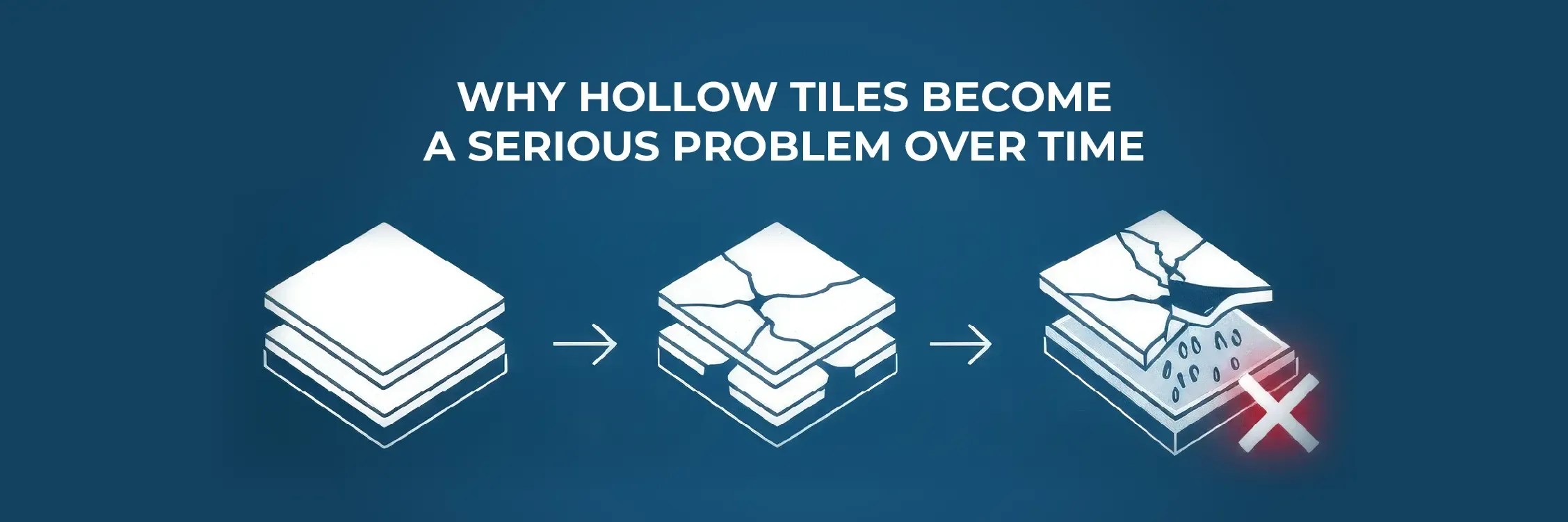
Hollow tiles usually do not fail immediately. They may stay in place for weeks or even months. That is why many people ignore them.
But slowly, daily use makes the weak spots weaker. Walking, furniture weight, and cleaning water add pressure again and again. In bathrooms, the problem becomes worse because moisture enters the empty space under the tile.
After some time, tiles crack, grout opens, or tiles come out suddenly. Repair then becomes costly and messy.
Why Hollow Sound Happens During Tile Fixing
Hollow sound does not happen without reason. In most cases, it is caused during installation.
The common reasons are:
Adhesive not spread properly
Very less adhesive used under tiles
Tiles not pressed or adjusted correctly
When adhesive coverage is uneven, air remains trapped below the tile. These air pockets create the hollow sound later.
This issue is more common in floor tiles and large-size tiles.
How Tile Adhesive Plays a Role in This Problem
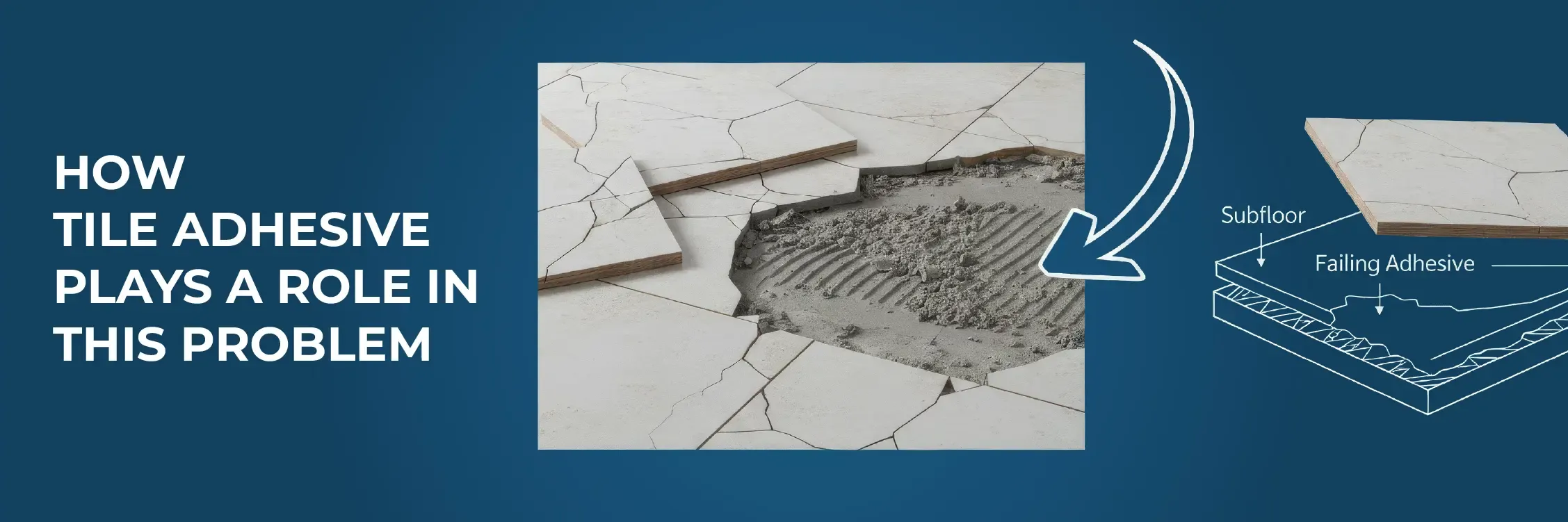
Tile adhesive helps prevent hollow sound, but only when it is used the right way. Even good adhesive cannot fix careless work.
If adhesive becomes too dry before fixing the tile, bonding becomes weak. If it is spread unevenly or left open for too long, a thin skin forms on the surface. Tiles fixed on such adhesive do not stick properly.
Using quality products from tile-adhesives like cx2 or VX-1 - Type 2T Tile Adhesive helps achieve better bonding when applied correctly.
Also, if tiles are not pressed firmly during fixing, air stays underneath. This later turns into hollow sound.
Why Grouting Cannot Solve Hollow Tile Issues
Some people think grouting will fix hollow sound. This is a misunderstanding. Grout only fills the joints between tiles. It does nothing under the tile.
If a tile is hollow, grouting will only hide the problem for some time. Water can still enter through joints and reach the empty space below.
Using good grout like ke100 or premium-unsanded-grout helps seal joints but cannot repair hollow bonding.
Once tiles are grouted, fixing hollow tiles becomes more difficult. That is why bonding must be correct before grouting starts.
Simple Practices That Help Prevent Hollow Tiles

Preventing hollow tiles is not complicated. It just needs attention at the right time.
The surface should be clean, dry, and level. Adhesive should be fresh and spread evenly. Tiles should be pressed properly so that air is pushed out.
Using tools like Tile Spacers helps maintain proper spacing and alignment.
Do not spread adhesive over a large area at once. Fix tiles while the adhesive is still workable. These small steps make a big difference.
What to Do If You Find Hollow Tiles
If hollow sound is noticed early, the affected tile should be removed and fixed again. Waiting usually makes the problem worse.
Hollow tiles should never be ignored in bathrooms, kitchens, or areas with heavy foot traffic. Early fixing saves money and avoids bigger repairs later.
Replacing one tile today is much better than repairing a full floor later.
What Happens If Hollow Tiles Are Ignored
Hollow tiles become weaker with time. Continuous load, water exposure, and daily use increase stress on weak areas.
Slowly, tiles may crack or come loose. In wet areas, moisture spreads faster and nearby tiles also get affected.
This is why hollow sound should always be taken seriously.
Conclusion: Hollow Sound Is a Clear Warning
A hollow sound in tiles mean the bonding underneath is not proper. It happens because of uneven adhesive, trapped air, or rushed tile fixing. Ignoring it leads to cracks, loose tiles, and expensive repairs.
Strong tiles depend on careful fixing, not just good material. When tiles are fixed evenly, there is no hollow sound — only solid floors and walls that last for years.
Tiles stay strong from the base level, not just from the surface.