What Is the Difference Between Cement and Tile Adhesive? Tile Adhesive vs Cement Explained
Gresbond by Kajaria Editorial Team
November 30, 2023
Cement is already on site, so it often becomes the tile glue. This guide explains the difference between cement and tile adhesive, what a cement based adhesive contains, whether you can mix them, and which type suits each tile.
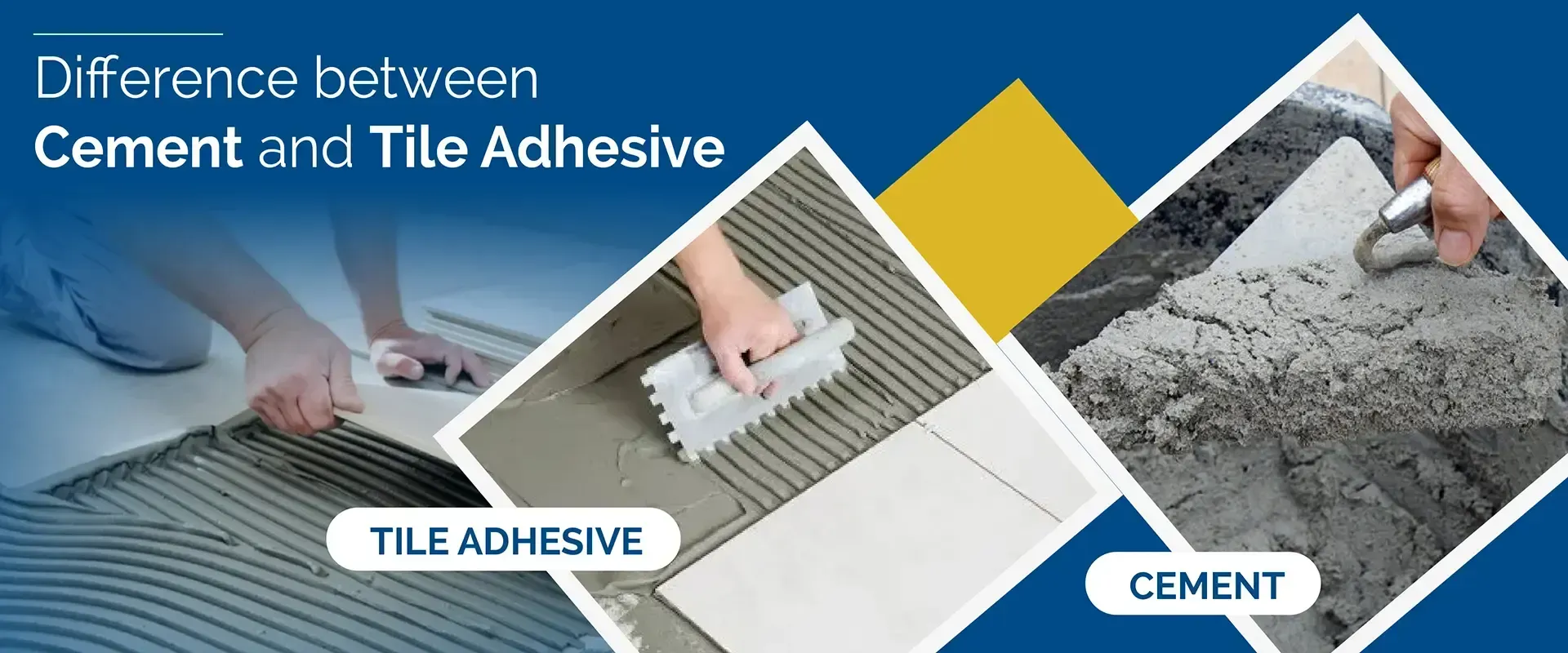
A bag of cement is already on the site and the sand is in the yard, so the mason mixes a bucket, spreads it thick and presses the tiles in. It has worked for decades, so nobody questions it.
Then the tiles change. Vitrified and large-format tiles absorb almost no water, which means a cement-sand bed has nothing to grip. Six months later a tap on the floor sounds hollow, and a year on a corner tile lifts.
That is the real tile adhesive vs cement question: not the price of a bag, but what holds the tile once the bed has set. Cement is a binder. Tile adhesive is a bonding system built around that binder. Here is what separates them, where cement still works and where it does not.
Key Takeaways
In tile adhesive vs cement, cement is the binder and the adhesive is the system. The adhesive adds polymers and graded fillers to the cement.
Cement-sand mortar needs a thick bed. Tile adhesive is combed into a thin, even bed with a notched trowel.
Vitrified and other low-porosity tiles need adhesive. They draw no water from the mix, so cement has little to grip.
Never add site cement or sand to a tile adhesive. Mix the powder with clean water only, as the pack states.
Cement based tile adhesive is still cement based. The polymer is what changes how it bonds.
Choose the adhesive type by tile and place. Ceramic, low-porosity, wet-area and exterior work each call for a different type.
The cheaper bag can make the dearer job. A failed bed costs more than the adhesive ever saved.
What is the difference between cement and tile adhesive?
Cement and tile adhesive are not rivals. One is an ingredient of the other.
Ordinary cement is a binder. Mix it with sand and water and you get mortar. That mortar bonds by setting into a hard, rigid mass, and it is usually laid thick to level a floor. It carries no polymers, and it has no way of controlling how much water it keeps.
Tile adhesive starts with cement as well. Then the manufacturer adds polymers and graded fillers, so the powder arrives balanced. You add clean water and nothing else. That is why manufacturers describe these adhesives as polymer-modified and cement-based, and why the pack asks for water and nothing else.
So the difference is not cement against something else. It is a raw binder against a finished bonding system. The bag carries the water ratio, the grain mix and the polymer dose, instead of leaving them to the mason's eye.
In India you will also hear it called tile gum or a tile fixing chemical. Same product, different name at the shop counter.
Tile adhesive vs cement: how each one bonds
Cement mortar bonds mechanically. The wet mix is pressed into the pores of the tile and the wall, and it hardens there. That only works if the tile has pores to grip, so ceramic tiles are soaked before fixing to stop them pulling water out of the mix too fast.
A thick bed brings its own problem. As it dries it shrinks, and shrinkage leaves small voids under the tile. That is where a hollow sound comes from, and our guide on why cement fails in bathroom tile fixing walks through the pattern.
Tile adhesive bonds differently. The polymers form a film between tile and substrate, so the grip does not depend on porosity alone. It is combed into a thin, even bed, and the ridges collapse under the tile to make full contact. Larger tiles also get adhesive on the back, which is called back buttering.
Mix it properly too: add the powder to the water, mix to a smooth paste, let it rest for 5 to 10 minutes, then remix briefly before use. The pack gives the exact water quantity.
Can you use cement as tile adhesive?
Sometimes, and that is the honest answer. Small, absorbent ceramic wall tiles on a rough plastered wall in a dry room can be fixed with cement-sand mortar.
But the list of jobs where it fails is long. Vitrified and porcelain tiles absorb almost no water. Large-format tiles need full contact that a thick, uneven bed rarely gives. Floors take load and temperature swings, and bathrooms and balconies see water every day. And tile laid over existing tile gives cement nothing to bite into.
So can you use cement as tile adhesive? Using cement for tiles is fine on the easy jobs. On the hard ones, a low-porosity tile needs an adhesive made for it, which is the point of our guide to vitrified tile adhesive.
Can you mix tile adhesive with cement?
No, and this is the most common myth on site. The idea is that a little extra cement makes the bond stronger, but it does the opposite. Tile adhesive vs cement is a choice, not a recipe to blend.
A tile adhesive is already balanced. The polymer sits in a set proportion to the cement and the fillers. Add site cement and you dilute the polymer, and add site sand and you change the grading. The mix on your wall is then not the mix that was made at the factory.
Manufacturer mixing instructions for tile adhesives are powder and clean water. They do not include cement or sand. So the question of whether tile adhesive needs cement has a short answer. It does not, because cement is already inside.
If the mix feels wrong, check the water quantity against the pack. Do not reach for the cement bag.
Cement based tile adhesive composition: what is inside
Brands do not publish their recipes, but the structure of a cement based tile adhesive is common across the category.
Cement is the binder. Graded fine fillers give a smooth mix that combs into a thin bed. Polymer powder is the part that gives the polymer-modified adhesives their name. And small additives tune the open time and slip resistance, which is what the letters in a classification code describe.
Those codes matter. IS 15477:2019 sorts adhesives by use. Type 1 is basic interior ceramic work, Type 2 is low-porosity tiles and wet areas, Type 3 is exteriors and tile-on-tile, and Type 4 is highly deformable adhesive for large slabs. Check the type on the pack, because it tells you what the adhesive was built for.
That is the tile adhesive composition in short. The tile adhesive vs cement gap is a composition gap: a tested, repeatable system, not a bucket of whatever is to hand.
Tile adhesive vs cement for each tile and job
Pick by the tile and the place, not by the bag price.
Ceramic tiles on interior floors and walls, including dry areas and occasional damp, suit a standard polymer-modified adhesive. Vitrified, semi-vitrified and natural stone tiles, wet areas, pools and tile-over-tile work need a low-porosity grade. Exteriors and glass mosaics call for a non-slip adhesive with extended open time. Large-format tiles and slabs call for a highly deformable grade. And mesh-backed mosaics, plywood and metal call for a polyurethane adhesive.
Cement-sand mortar has no grades like these, and that is the practical difference. A modern adhesive range lets the tile decide.
Not sure which type you need? Start from the tile, then compare it with the full tile adhesives range.
Tile adhesive vs cement: which costs less over time?
In tile adhesive vs cement, cement is cheaper per bag. That is true, and it is why the habit survives.
But a bag is not the job. A thin adhesive bed generally uses less material per square metre than a thick mortar bed. It is faster to lay and easier to keep flat. And it removes the expensive part, which is lifting and refixing tiles when a bed fails.
So count the whole job: material, labour, wastage and the risk of rework. Our guide on what actually decides tile adhesive price explains the cost drivers without quoting figures that go stale.
Frequently Asked Questions
Cement is a raw binder that becomes mortar once you add sand and water. Tile adhesive is a cement-based powder with polymers and graded fillers already built in, and it takes clean water only.
On small, absorbent ceramic wall tiles in a dry room, cement-sand mortar can hold. On vitrified tiles, floors, wet areas and exteriors it is the wrong tool, because the tile gives it little to grip.
No. Extra cement dilutes the polymer and extra sand changes the grading, so the bond is no longer the one the adhesive was made to give. Mix the powder with clean water as the pack states.
A ready-to-mix, cement-based powder that fixes tiles in a thin bed. In India it is also called tile gum or a tile fixing chemical, and many people simply ask "adhesive kya hota hai".
No. Cement is already one of its ingredients, so adding more only upsets the balance. Water is the only addition.
It is not recommended. Vitrified tiles absorb almost no water, so a cement bed cannot grip them and hollow spots follow. Use an adhesive graded for low-porosity tiles.
No. Adhesives, mortars and grouts are not substitutes for waterproof membranes. Wet areas still need a proper waterproofing layer under the tiles.
Wait 24 hours before walking on them or grouting, and allow around 14 days for full strength.
Still have questions? Contact our technical team