Tile Joint Width Guide: How Much Gap Is Actually Required Between Tiles?
January 15, 2026
Introduction: Why Tile Spacing Matters More Than You Think
Tile problems usually do not appear on the first day. Everything may look fine after installation. Then slowly, after a few weeks or months, issues start showing up. In many cases, the main reason is very simple—tile spacing was not done properly.
The gap between tiles is not only for making the floor look neat. It has a practical purpose. Tiles are not fixed objects. Floors and walls move slightly because of temperature changes, moisture, and daily use. When tiles are placed too close together, this movement has nowhere to go.
At first, the signs are small. Grout lines begin to crack. Some tiles make a hollow sound when tapped. Later, tiles may loosen, edges can chip, and in wet areas, water may slowly seep below the surface. These problems often get blamed on tile quality, but most of the time, the tiles are fine. The spacing was simply ignored.
Proper spacing allows tiles to adjust naturally without damage. It helps grout settle properly and keeps moisture under control. When spacing is done right, the tiles, adhesive, and surface work together smoothly.
Good tile installation is not just about buying good tiles. It is about giving them enough space to stay stable, strong, and trouble-free for years.
In this guide, we’ll cover:
How much space tiles actually need
When 2mm works and when 3mm makes more sense
What spacing rectified tiles really require
Grout sizing for large tiles like 600×600
Why epoxy grout needs breathing room
What Is the Space Between Tiles Called?
The gap between two tiles is called a grout joint.
It’s filled with grout for a reason. That joint helps tiles deal with:
Small movements caused by heat or load
Pressure from foot traffic
Water and dirt entering below the tile layer
When this joint is reduced too much, tile systems start failing quietly.
How Much Gap Should I Leave Between Tiles?
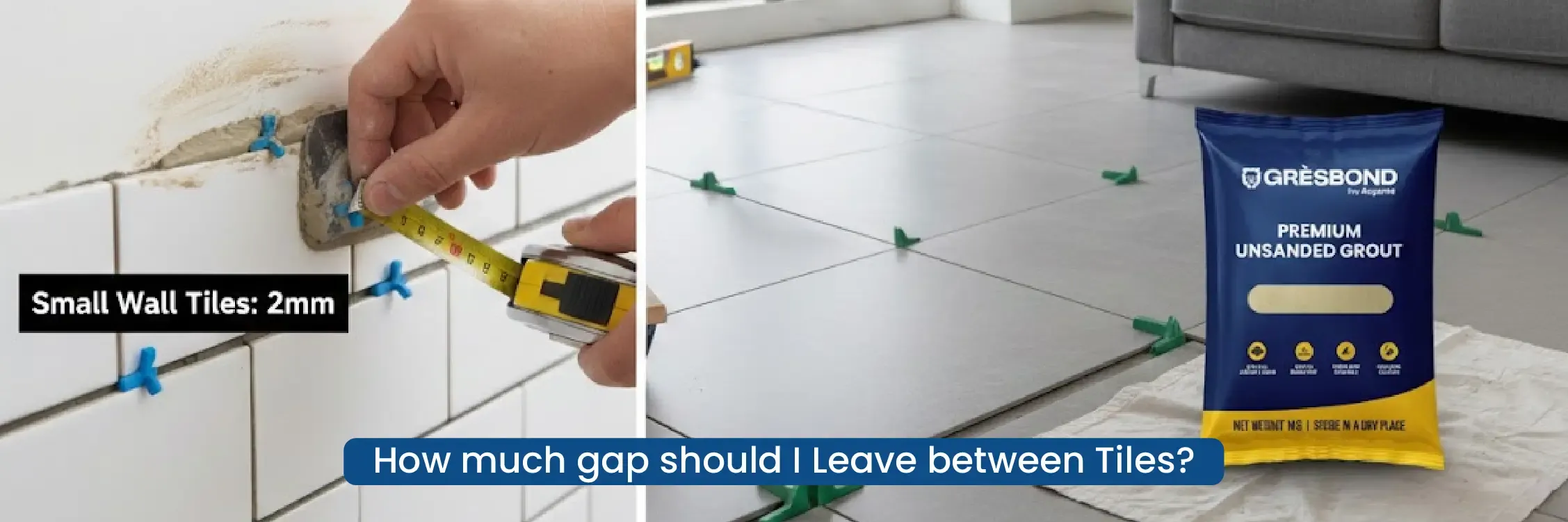
There is no one gap that works everywhere. Every tiling job is different. What works on one site may not work on another. Tile size is the first thing to look at. Bigger tiles usually need a little more space so they do not press against each other later. Tile type also matters. Some tiles are very even, some are not. Tiles with uneven edges need wider joints to look straight. Surface condition is another issue. Many floors and walls are not perfectly level. In such cases, tight gaps create problems like cracks or uneven grout lines. Grout choice also matters. Certain grouts need enough space to fill properly and hold their strength over time.
General Tile Gap Size (in mm)
Tile Type / Size | Recommended Gap |
|---|---|
Small wall tiles | 2 mm |
Floor tiles (standard) | 3 mm |
Large-format tiles | 3–5 mm |
Outdoor / balcony tiles | 4–5 mm |
Rectified tiles | Minimum 2–3 mm |
Trying to install tiles with no gap at all almost always creates problems later.
Should I Use 2mm or 3mm Tile Spacers?
This is one of the most debated points on-site.
2mm Grout Line – When It Can Work
Wall tiles
Indoor areas with controlled conditions
Perfectly levelled surfaces
3mm Grout Line – When It’s the Safer Option
Floor installations
Slight surface unevenness
Normal Indian construction conditions
Easier and stronger grouting
In most real projects, 3mm spacing avoids future complaints.
1/16 vs 1/8 Grout Lines (International Reference)
1/16 inch ≈ 1.5 mm
1/8 inch ≈ 3 mm
Installers often use:
Narrow joints on walls
Wider joints on floors
In India, measurements are mostly in millimetres, and 3mm is widely accepted for floors.
What Is the 3 / 4 / 5 Rule for Tiling?
On site, installers often follow what is called the 3 / 4 / 5 rule. It is not a strict formula, just a practical guide. For normal indoor floors, a small gap usually works, so around 3 mm is commonly used. When tiles are larger or the area is walked on a lot, a slightly wider joint feels safer, usually around 4 mm. Outdoor areas are different. Balconies, terraces, and open spaces face heat, rain, and constant movement, so installers prefer about 5 mm there. The idea is simple. Where tiles move more, the joint should not be tight. A little extra space helps prevent cracks, loose tiles, and long-term problems.
What Is the 1/3 Rule for Tiles?
The 1/3 rule relates to tile layout, not spacing directly.
With large tiles:
A 50% offset often creates height differences
A 1/3 offset layout reduces lippage
Once tiles are staggered, grout joints become even more important to manage unevenness.
Grout Joint Width: How to Decide the Right Size?
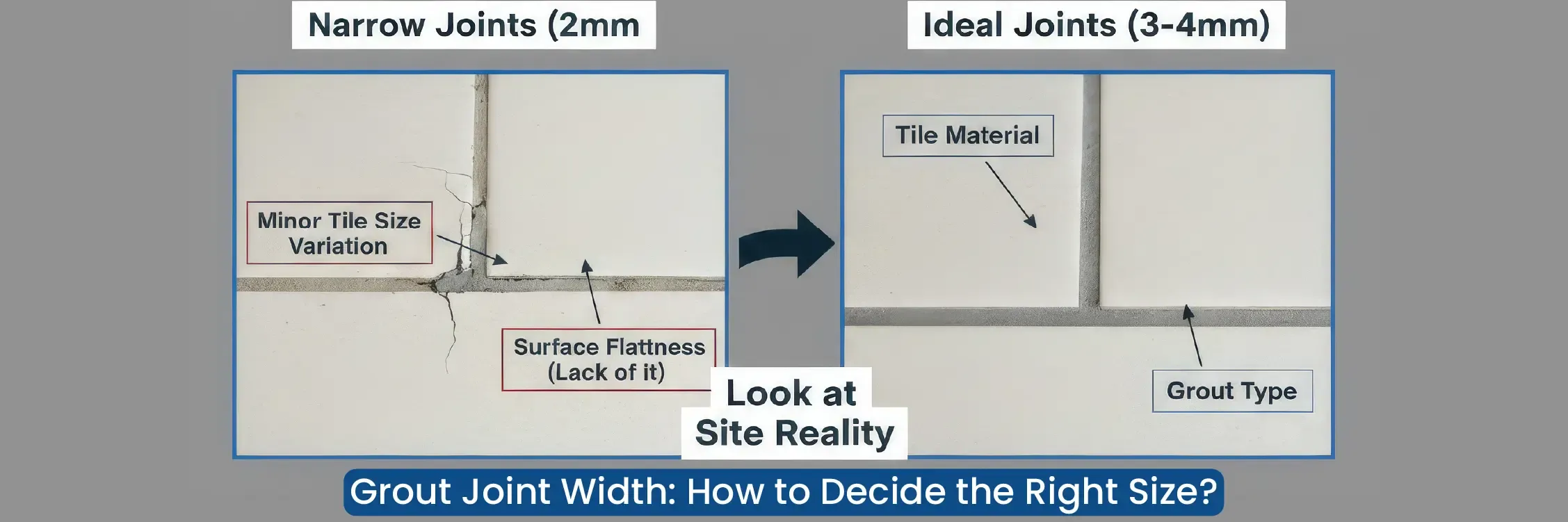
Instead of aiming for the smallest possible joint, look at site reality.
Factors you must consider:
Minor tile size variation
Surface flatness (or lack of it)
Tile material
Grout type
Narrow joints only succeed when everything else is near perfect. On most sites, slightly wider joints last longer.
Grout Size for 600×600 Floor Tiles
600×600 tiles are extremely common in Indian homes.
Recommended grout size:
Minimum: 3 mm
Ideal: 3–4 mm
Using a 2mm gap with tiles this size often leads to uneven lines and weak grout filling.
Rectified Tiles: How Much Grout Width Is Enough?
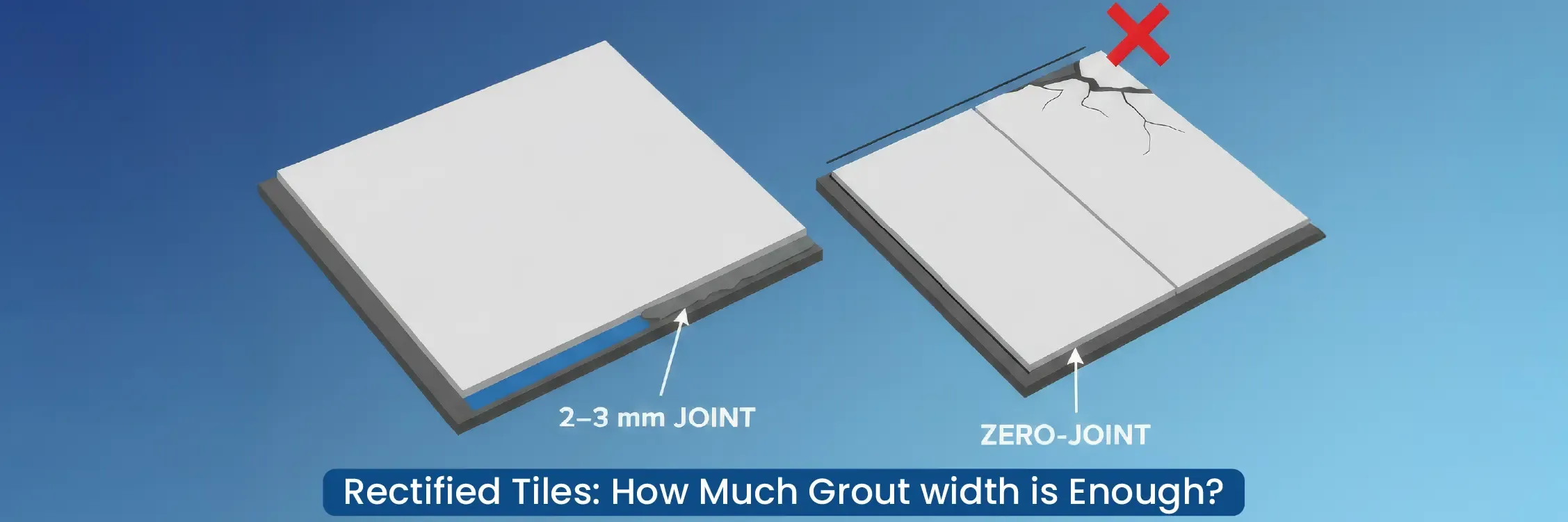
Rectified tiles look sharp because their edges are machine-cut.
That doesn’t mean they don’t move.
Reality check:
Rectified tiles still expand and contract
A minimum 2–3 mm joint is still required
Zero-joint installations often result in chipped edges and cracked grout over time.
Why Epoxy Grout Needs Space
Rigid epoxy grouts like ke-100 glitter need at least 2–3 mm joints to perform properly.
Tools That Make Spacing Accurate
Use tc-1, trowel, rubber-float, suction cup, and hole marker for precise work.
Choosing the Right Trowel Size for Tile Installation
Spacing alone won’t help if adhesive coverage is poor.
Tile Size | Recommended Trowel |
|---|---|
Small wall tiles | 6×6 mm |
300×300 tiles | 8×8 mm |
600×600 tiles | 10×10 mm or more |
Good coverage supports tiles evenly and protects grout joints.
Addressing Low Grout Joints & Installation Standards
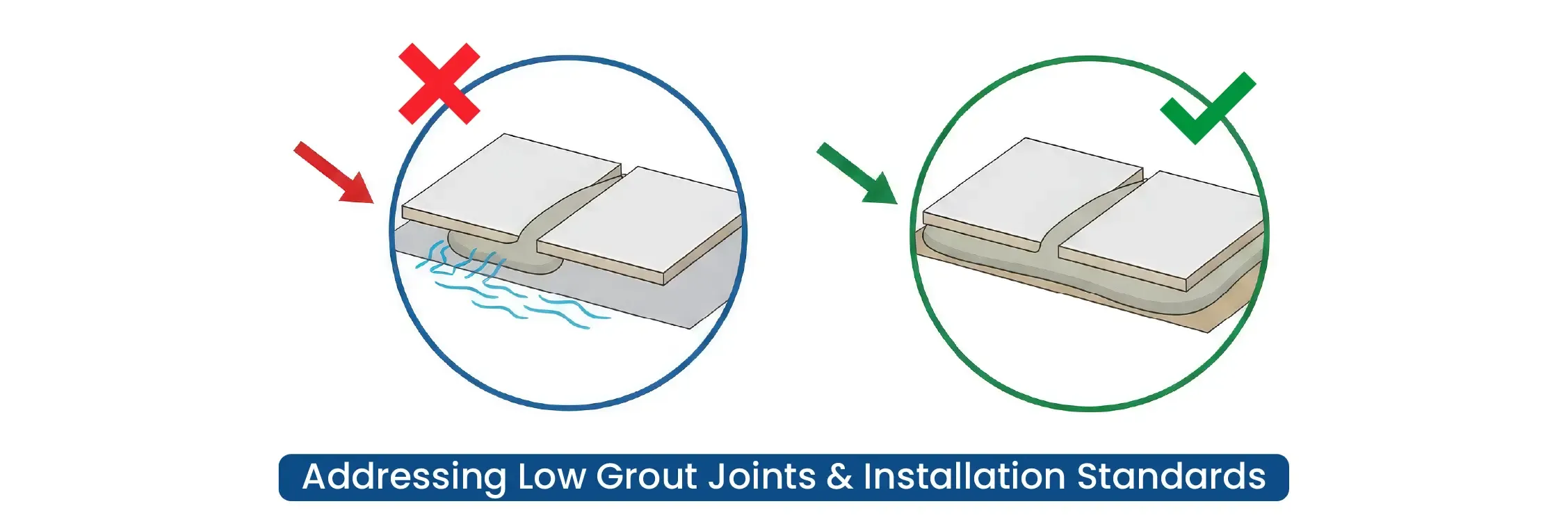
When grout is filled too shallow:
Water enters below tiles
Grout cracks early
Tiles slowly loosen
Installation standards recommend filling grout joints properly below the tile edge—not just at the surface.
Final Takeaway
Strong tile work is not about hiding grout joints or making gaps disappear. It is about using the right joint width in the right place and understanding why that space matters. Tiles may look hard and solid, but they are not rigid forever. Floors and walls move slightly because of temperature changes, moisture, and daily use. Grout joints handle this movement quietly in the background. When joints are too tight or ignored, stress builds up under the tiles, leading to cracks, hollow sounds, loose tiles, or water seepage over time. These problems rarely show up immediately, which is why spacing mistakes often go unnoticed at first. Proper joint width allows tiles, adhesive, and grout to work together as one system. It helps spread load evenly, protects the bond, and keeps moisture under control. In the long run, grout joints decide how long a tile installation lasts. Tiles may get all the attention, but it is the grout spacing that truly determines durability and performance.
Frequently Asked Questions
Around 3 mm for floors and 2 mm for walls works well.
Usually between 2–5 mm, depending on tile size and location.
For Indian floors, 3mm is more reliable.
To keep spacing consistent and grout lines straight.
Because tiles expand and contract, and gaps prevent cracking.
Still have questions? Contact our technical team