Complete Guide to Installing Large Porcelain Slabs
gresbond
October 5, 2025
Large format tiles look stunning—fewer joints, a seamless feel, and easy cleaning. But to get that premium finish, you need the right surface prep, tile adhesive, tools, and technique. Let’s break it down in simple words so a contractor can follow it without stress.
1. Know your slab and area
Tile size & thickness (e.g., 1200×2400 mm, 6–9 mm).
Substrate type (concrete, screed, existing tiles, cement board).
Location (bathroom, kitchen, balcony, façade, living room).
Traffic & moisture (wet areas need a stronger waterproofing and epoxy grout).
Why this matters: Big slabs need strong tile adhesive, a perfectly level surface, and proper movement gaps to stop tiles from cracking or popping up later. Choosing products from a Best Tile Adhesives Company helps ensure long-term performance.
2. Tools and materials you’ll need
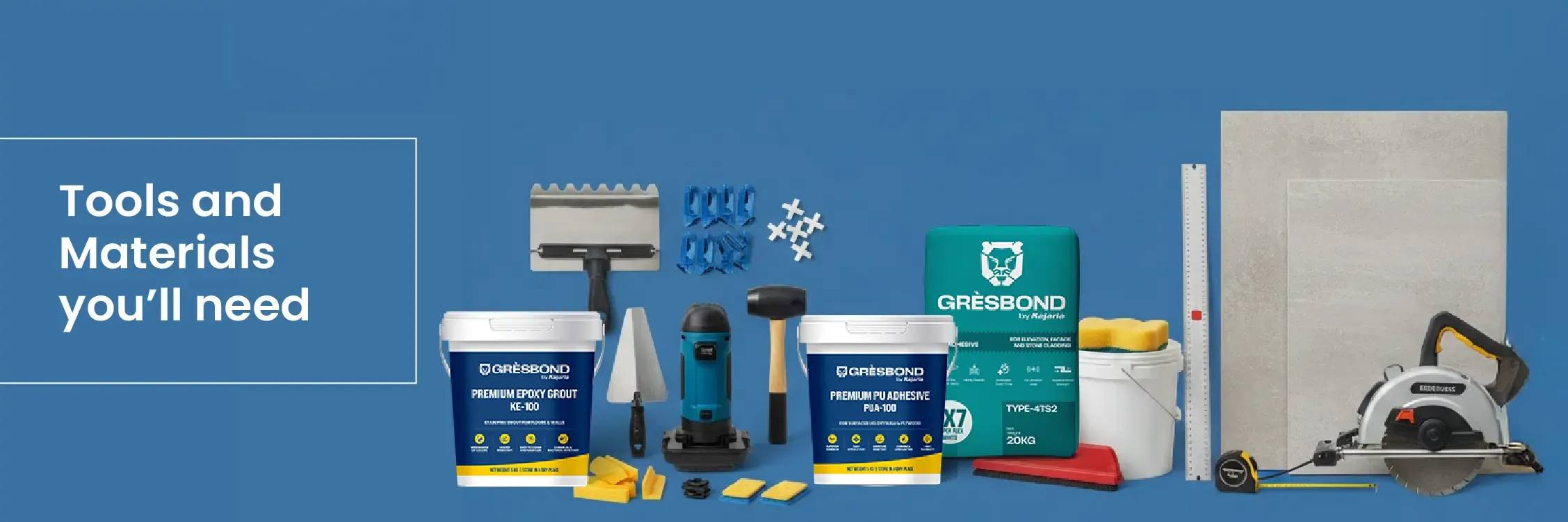
Flexible, non-sag tile adhesive for large slabs such as CX-1 - Polymer Tiles.
Notched trowel (10–12 mm for floors, 8–10 mm for walls).
Tile leveling clips and wedges for proper Tile Leveling.
Rubber mallet for gentle tapping.
Cordless tile vibrator (optional).
Tile spacers for uniform joints.
Mixing drill with paddle.
Primer for porous surfaces.
Epoxy or premium unsanded grout such as KE 100 Duet.
Rubber float, sponge, bucket.
Measuring tools, straightedge, tile cutter or wet saw.
Tip: For heavy slabs, always plan team lifting.
3. Substrate preparation (non-negotiable)
Most failures come from poor prep. Do this:
Check flatness: Large tiles need very flat surfaces (±3 mm over 2 m). Use a long straightedge to find highs and lows.
Repair: Fill depressions and grind down humps to create a level base.
Clean: Remove dust, oil, paint, and curing compounds completely.
Prime if needed: On very absorbent surfaces, apply a compatible primer so the adhesive doesn’t dry too fast.
Waterproof wet areas: Bathrooms, balconies, and terraces should get a proper waterproofing layer before tiling.
4. Choose the right adhesive
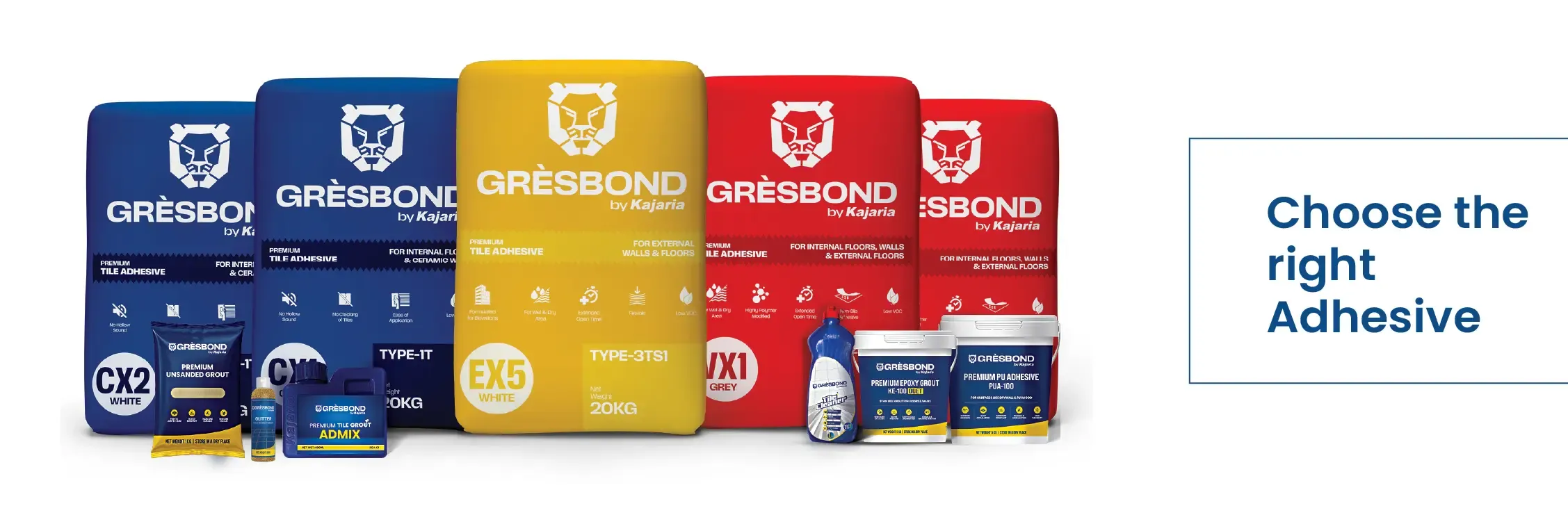
For large porcelain slabs, pick a flexible, high-bond, polymer-modified tile adhesive designed for big formats and low-porosity tiles. For balconies, terraces, or outdoor areas, use an improved deformable adhesive with better grab and weather resistance. For very heavy slabs or vertical applications, look for non-slip or non-sag ratings.
Quick rule: Big tile = bigger demands on adhesive.
5. Plan the layout
Dry-lay slabs to visualize joints and cuts.
Avoid thin slivers at edges.
Mark reference lines for alignment.
Allow proper movement joints.
6. Mixing the adhesive
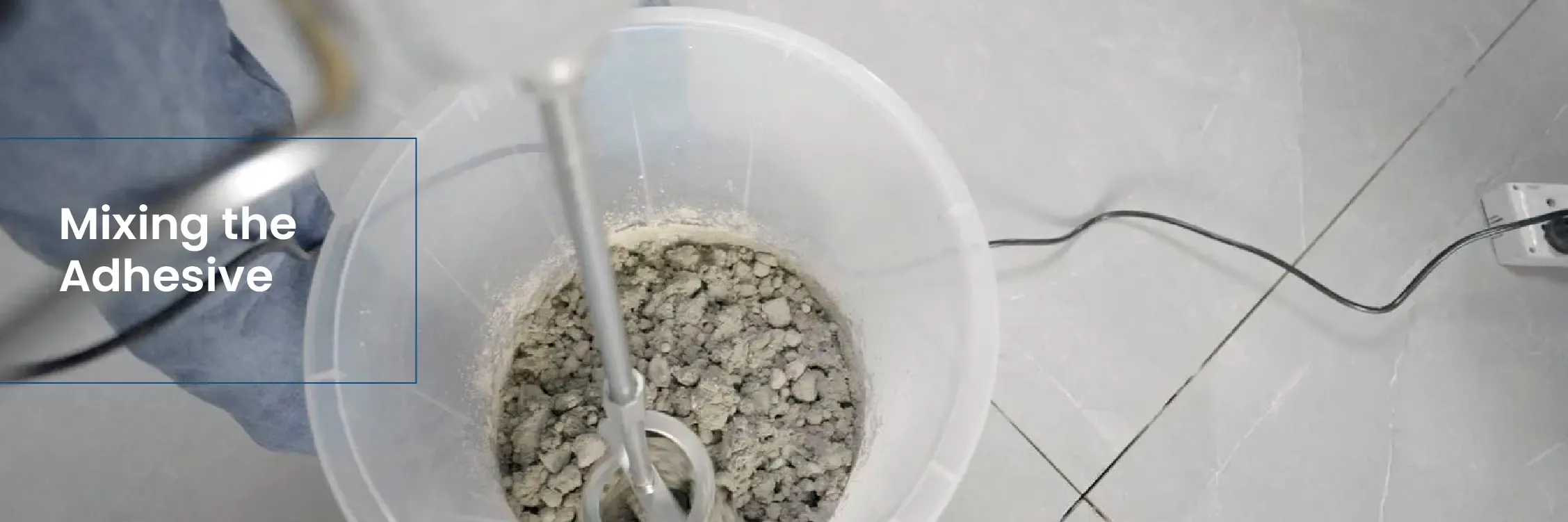
Measure clean water as per label.
Pour water first, then powder.
Mix for 2–3 minutes.
Allow resting time, then remix.
Use within open time.
7. Troweling technique (coverage is king)
Burn-in adhesive on substrate.
Comb in one direction.
Back-butter the slab.
Ensure 90–100% coverage.
8. Placing and leveling the slab
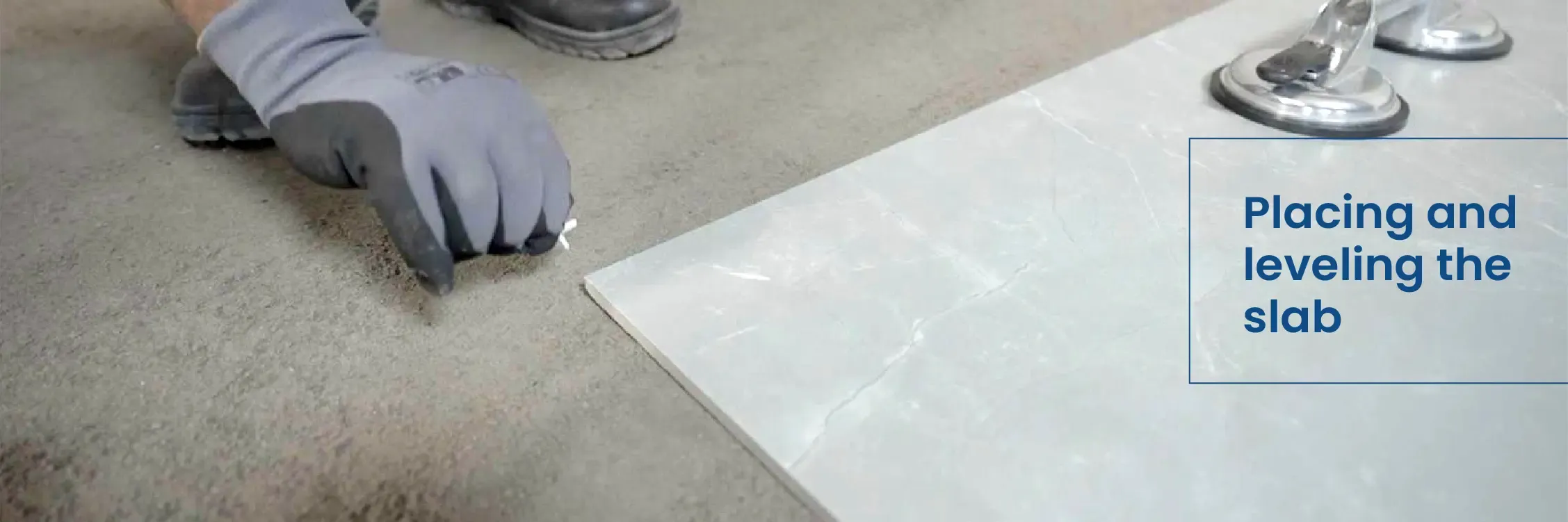
Lift and place carefully.
Slide slightly to collapse ridges.
Tap gently with rubber mallet.
Install leveling clips.
9. Joint width and spacers
Large porcelain slabs typically use 2–3 mm joints indoors.
10. Cutting slabs cleanly
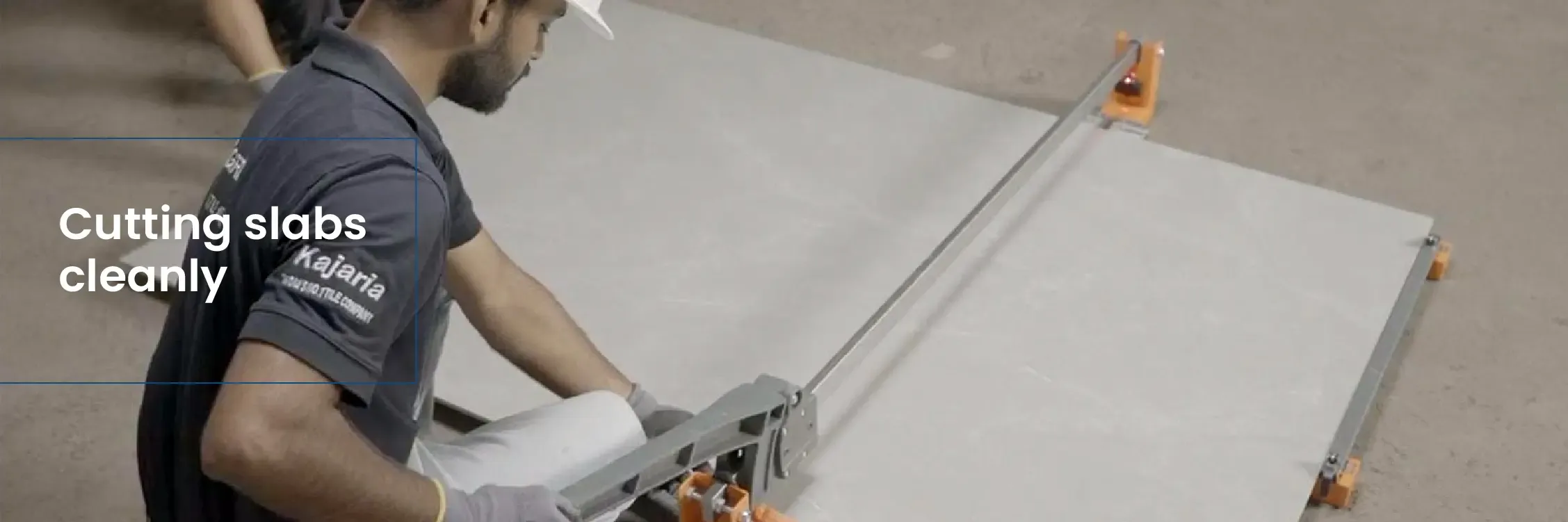
Use rated score-and-snap or wet saw.
Support slabs fully during cutting.
Use proper hole markers for cut-outs.
11. Curing time
Allow full curing before walking or grouting. Cold or damp conditions increase curing time.
12. Grouting large slabs
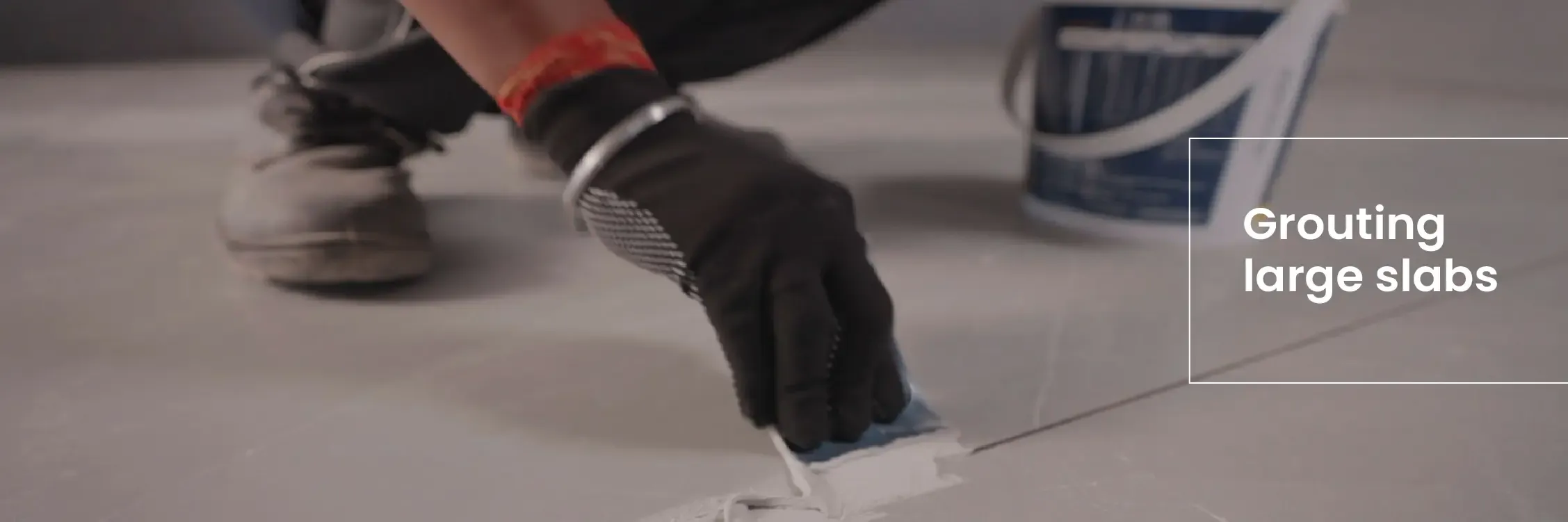
Use epoxy grout for wet or high-traffic areas.
Use premium unsanded grout for narrow joints.
Clean grout haze before it hardens.
13. Movement joints and sealing
Leave flexible joints around perimeters and structural breaks.
14. First Clean and Daily Care
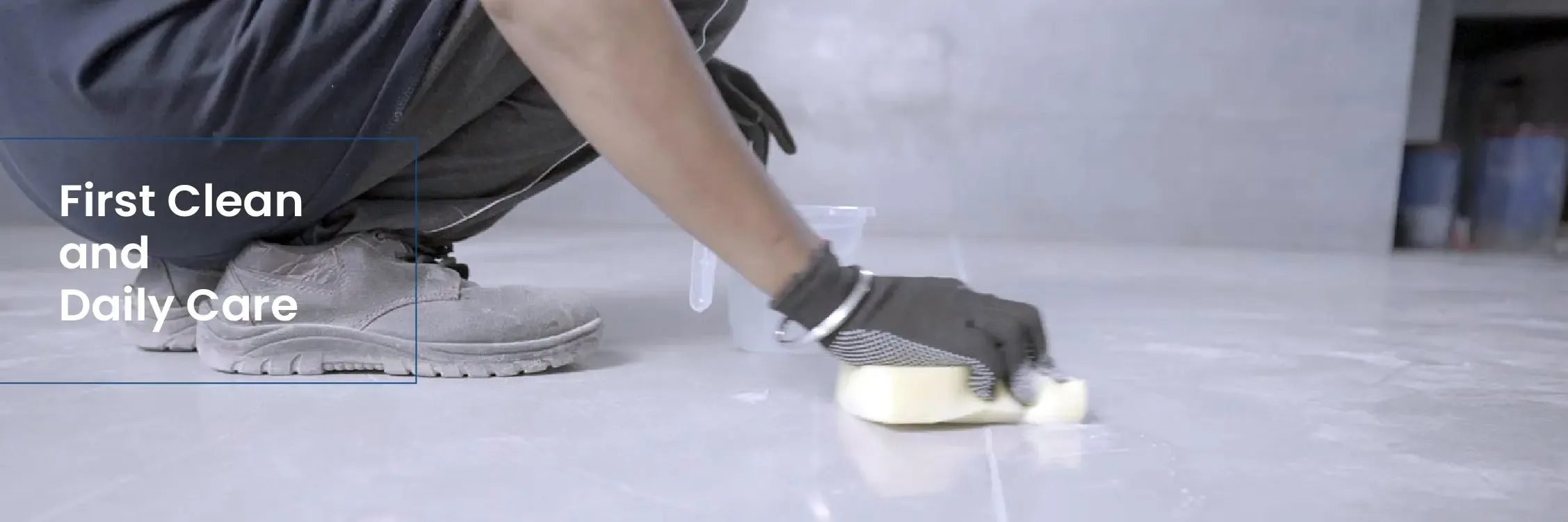
Remove residue after setting.
Use gentle tile cleaner only.
Clean spills immediately.
Use pads under heavy furniture.
15. Common mistakes to avoid
Using cement mortar.
Poor surface flatness.
Skipping back-buttering.
Using small trowel notches.
Rushing grouting.
No movement joints.
Frequently Asked Questions
Yes — if the old tiles are sound, clean, and properly primed.
Epoxy grout for kitchens and bathrooms; unsanded grout for narrow indoor joints.
Yes, it is strongly recommended for large slabs.
Still have questions? Contact our technical team