The Adhesive Manufacturing Process at Gresbond by Kajaria
gresbond
May 2, 2026
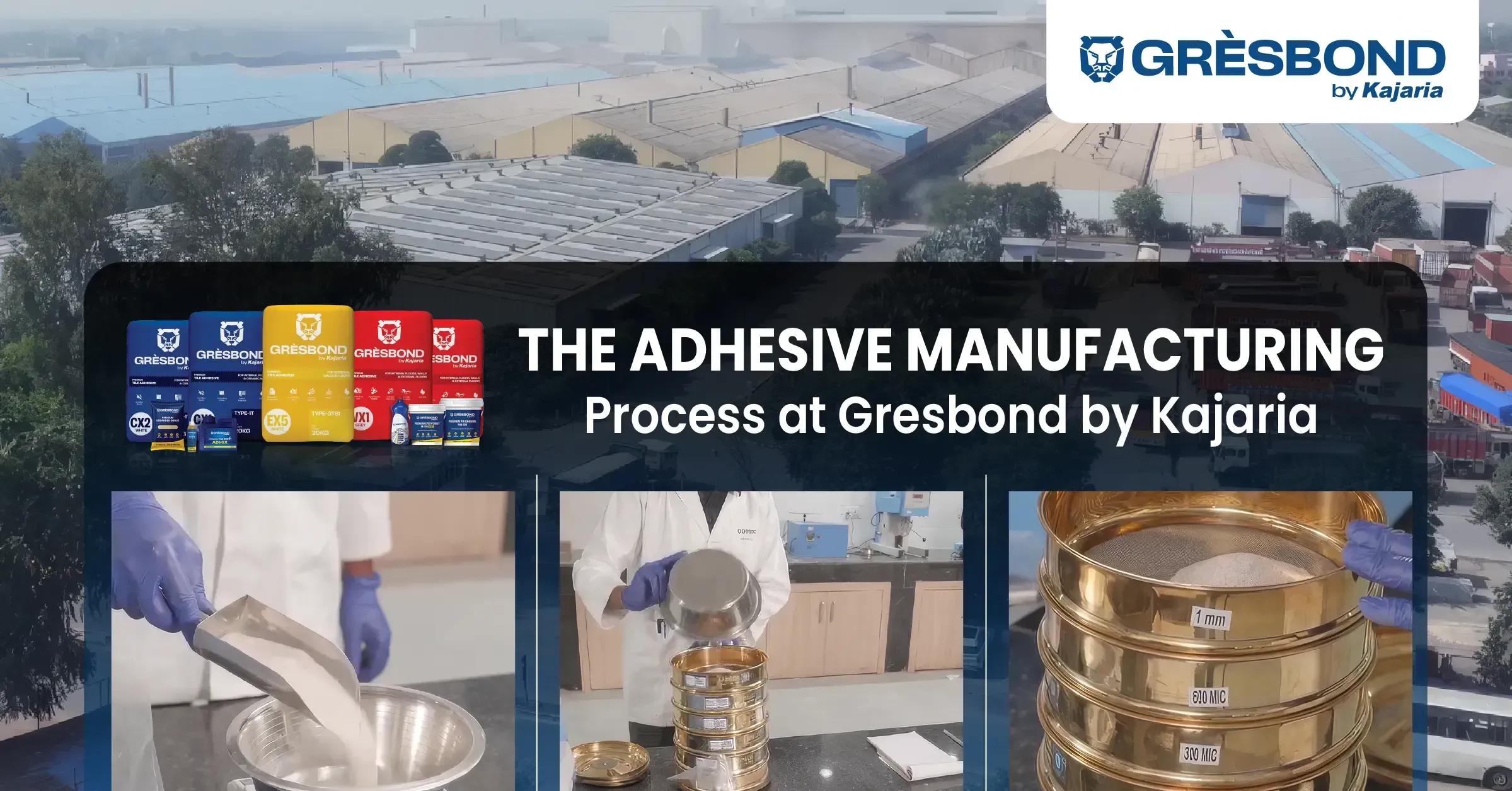
A tile installation lasts only as long as the adhesive behind it. At Gresbond by Kajaria, adhesives are developed for real site conditions—not just lab results. These products are meant for homes, offices, bathrooms, kitchens, balconies, and outdoor areas where moisture, load, and daily use are part of the job. To understand what truly makes a difference, choosing the Best Tile Adhesives is critical for long-term performance.
Modern tile adhesives do much more than stick tiles. They hold weight, absorb small surface movements, resist water, and help tiles stay firm for years. When you understand how Gresbond adhesives are manufactured, choosing the right product becomes easier and smarter—for both professionals and homeowners.
This guide explains the adhesive manufacturing process at Gresbond by Kajaria in clear, easy language, and shows why these solutions perform better than traditional cement fixing.
Why the Manufacturing Process Matters
An adhesive performs well only if it is made well. At Gresbond, every stage—material selection, mixing, testing, and packing—is carefully controlled. Each step affects bonding strength, workability, setting time, and resistance to moisture and temperature changes.
When manufacturing is done right, common problems like loose tiles, hollow sounds, cracks, and tile pop-ups are greatly reduced. Tile adhesives and grouts are engineered products, not just cement mixed with sand. Their quality starts inside the factory.
The Complete Tile Adhesive Manufacturing Process at Gresbond by Kajaria
https://youtu.be/Z0DiRvbA0Zk?si=ZKMz1x0ne5yAjKaL
Step 1: Raw Material Selection
The process begins with choosing the right raw materials. Gresbond by Kajaria uses high-grade cement, refined sand, polymers, and performance additives. Each ingredient has a clear role—some improve bonding, some add flexibility, and others protect against moisture, which is why products like CX-1 tile adhesive deliver consistent performance on site.
Using consistent, quality materials ensures the adhesive works reliably on different surfaces and keeps tiles fixed for the long term.
Step 2: Precision Mixing & Formulation
Once selected, materials are mixed using automated systems that measure exact quantities. Proper mixing is critical. Even a small imbalance can affect site performance.
Accurate formulation ensures the adhesive spreads smoothly, grips tiles properly, and sets within the expected time. This is especially important for polymer-based tile adhesives, where consistency from bag to bag matters on large projects.
Step 3: Quality Control & Testing
Before packing, every batch goes through strict quality checks. Adhesives are tested for bonding strength, setting time, flexibility, and performance in dry and wet conditions. This is why products like VX-1 tile adhesive consistently meet demanding site standards.
These tests ensure the product works well in bathrooms, kitchens, high-traffic floors, and other demanding areas. This level of testing is what separates Gresbond adhesives from low-quality alternatives that often fail after installation.
Step 4: Automated Packaging
After approval, adhesives are packed using automated machines. This keeps the product clean and protects it from moisture and contamination. Machine packing also ensures accurate weight in every bag.
Special products like epoxy grouts and epoxy adhesives are packed with extra care so their performance remains intact until site use.
Step 5: Application-Focused Product Design
Gresbond adhesives are designed based on where they will be used. Floors, walls, large-format tiles, and wet areas all need different bonding properties. That’s why Gresbond offers specific solutions for each application instead of a one-product-fits-all approach.
Tools like the tile adhesive selector help users quickly choose the correct product for their site conditions.
Step 6: Installation Support & Right Tools
Manufacturing is only one part of performance. Correct installation tools also matter. Using systems like a tile leveling system keeps tiles aligned and evenly spaced, allowing the adhesive to perform as intended. Supporting tools such as a rubber mallet and application aids like TC-1 further improve accuracy during installation.
When the right adhesive is paired with the right tools, the finished tile work looks clean, even, and professional. Finishing products like KE-100 Glitter enhance the final appearance, while maintenance solutions such as marble cleaner help preserve the surface quality long after installation.
Step 7: Education Through Video & Demonstration
Gresbond also focuses on education. A dedicated manufacturing process video explains how materials are mixed, tested, and packed.
This helps contractors, architects, and homeowners clearly understand what goes into each bag of adhesive.
Step 8: From Factory to Site Performance
The goal of the adhesive manufacturing process at Gresbond by Kajaria is simple—long-lasting performance on site. Properly manufactured adhesives reduce tile failures, handle surface movement, resist moisture, and extend the life of the installation. This is why solutions such as EX-5 tile adhesive and LX-7 tile adhesive are trusted for demanding applications.
That’s also why modern solutions like tile adhesive chemicals perform far better than traditional cement, especially in areas where durability truly matters. For finishing and joint protection, products like premium unsanded grout and supporting systems such as KGA-01 help complete installations that last longer and perform consistently.
Frequently Asked Questions
The adhesive manufacturing process at Gresbond by Kajaria begins with careful selection of high-quality raw materials such as cement, graded sand, polymers, and specialty additives. These materials are measured precisely and mixed using automated systems to ensure consistency in every batch. The mixture then goes through strict quality testing to check bonding strength, workability, and durability. Once approved, the adhesive is packed in secure, moisture-resistant packaging so that it maintains its performance during storage and transportation.
Traditional cement fixing methods rely mostly on sand and cement, which often provide weaker bonding and limited flexibility. Gresbond tile adhesives are engineered formulations designed specifically for modern tiles such as vitrified, porcelain, and large-format tiles. They provide stronger adhesion, improved flexibility, and better resistance to moisture and temperature changes. This reduces the chances of tile hollowing, cracking, or detachment over time, making them a more reliable option for both residential and commercial installations.
Polymers are one of the key components that improve the overall performance of tile adhesives. In Gresbond adhesives, polymers enhance bonding strength between the tile and the surface. They also improve flexibility, allowing the adhesive layer to handle minor surface movement or temperature changes without cracking. This helps prevent tile debonding and ensures long-lasting installation. Polymers also contribute to water resistance, making the adhesive suitable for bathrooms, kitchens, balconies, and other moisture-prone areas.
No, tile adhesives are not all manufactured using the same formulation. Different applications require different properties such as higher bonding strength, flexibility, or water resistance. Gresbond manufactures multiple adhesive variants depending on tile size, surface type, and installation area. For example, large-format tiles, wall tiles, outdoor installations, or wet areas may require specialized formulations. This targeted manufacturing approach ensures that the adhesive performs effectively for specific installation conditions.
Quality testing is a crucial part of adhesive manufacturing. At Gresbond, every batch goes through multiple quality control checks before packaging. These tests evaluate bonding strength, setting time, workability, and resistance to moisture or water exposure. Laboratory testing ensures the adhesive meets industry standards and performs consistently across different surfaces. This process helps maintain product reliability and ensures that installers and contractors receive dependable materials for tile installation.
Automation plays a major role in maintaining precision and consistency during adhesive production. Automated systems measure raw materials accurately and control the mixing process to maintain uniform composition in every batch. This reduces human error and ensures that each product performs exactly as expected. Automation also supports cleaner production environments and better packaging efficiency, helping maintain the overall quality and reliability of Gresbond tile adhesives.
Yes, poor manufacturing practices can lead to serious tile installation problems. If the adhesive formulation is weak or poorly balanced, it may not provide proper bonding strength. This can result in hollow tiles, cracking, or tiles coming loose over time. Lack of quality testing or inconsistent mixing can also affect performance. Reliable manufacturers like Gresbond by Kajaria follow strict quality control processes to ensure adhesives perform correctly and reduce the risk of tile failure.
Yes, epoxy adhesives require careful handling during manufacturing and application. These adhesives typically consist of two components that must be mixed in the correct ratio to achieve proper chemical bonding. During production, controlled mixing and accurate packaging are essential to maintain product stability. Because epoxy adhesives offer high strength and chemical resistance, they are often used in demanding environments such as industrial flooring, commercial kitchens, and heavy-traffic areas.
The manufacturing process directly influences how easy an adhesive is to apply. A well-formulated adhesive spreads smoothly, provides sufficient working time, and sets predictably. Proper mixing of raw materials ensures the adhesive maintains the right consistency and performance during installation. When adhesives are manufactured with precision, installers find it easier to spread them evenly, align tiles properly, and achieve stronger bonding.
Understanding how tile adhesives are manufactured helps users make better choices when selecting products. A properly manufactured adhesive offers reliable bonding, durability, and long-term performance. When buyers know the importance of quality raw materials, polymers, and testing processes, they can avoid low-quality products that may lead to tile damage or costly repairs. Choosing a trusted manufacturer such as Gresbond by Kajaria ensures safer and more durable tile installations.
Still have questions? Contact our technical team