What is Slip (Sag) Resistance Test in Wall Tile Installation?
gresbond
March 13, 2026
When we fix tiles on a wall, we want them to stay in the same place. They should not move down. They should not tilt. They should not spoil the design.
But here is the problem. When tiles are fixed on a wall, gravity pulls them down. If the adhesive is not strong, the tile can slowly slide before it dries. Even a small movement can make the wall look uneven. Using strong adhesives like CX-1 or VX-1 helps prevent this.
This is why slip, also called sag resistance, is very important.
What Does Slip or Sag Mean?
Slip or sag means how much a tile moves after you stick it on a wall.
If the adhesive is strong, the tile stays in the same position.
If the adhesive is weak, the tile moves down a little.
Good sag resistance means the tile does not slide. It stays fixed exactly where you place it.
Why Do Tiles Slide on Walls?
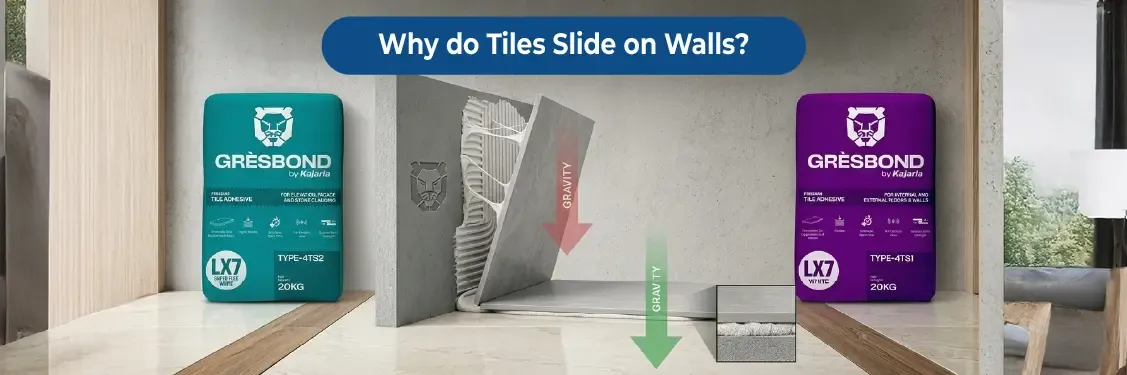
Tiles slide because of gravity. On the floor, gravity helps tiles stay down. But on the wall, gravity works against you. If the adhesive is too soft or too watery, it cannot hold the weight of the tile. Heavy tiles and big tiles are more likely to slide if the adhesive is not good. Products like LX-7 S1 or LX-7 Superflex S2 provide strong wall adhesion.
What is the Slip (Sag) Resistance Test?
This test checks how much a tile moves after it is fixed on a vertical surface.
Let’s understand in very easy steps. First, a straight vertical board is taken. This board acts like a wall. Then, adhesive is applied on the board using a TROWEL. The thickness is kept proper and even. Next, a tile of fixed size and weight is pressed onto the adhesive.
After placing the tile, they check if the tile moves down. If it moves, they measure how many millimeters it moved. If the tile does not move or moves very little, the adhesive has good sag resistance. If the tile moves more, the adhesive is not strong enough for wall use. Simple.
Why is Sag Resistance Important?
Now let’s understand why this matters so much.
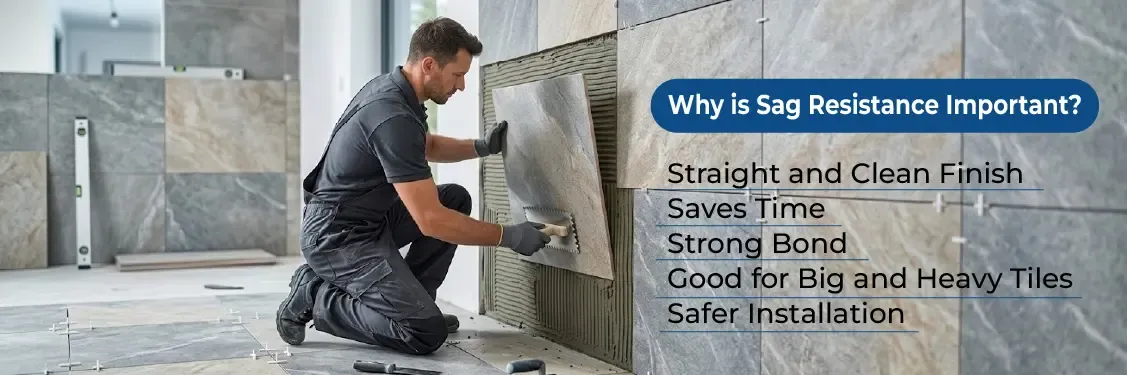
1. Straight and Clean Finish
When tiles do not move, they stay straight. The gaps between tiles remain equal. The wall looks neat and perfect. If tiles slide even a little, the lines become uneven. The whole design looks bad.
2. Saves Time
If tiles stay in place, the worker does not need to keep adjusting them again and again. Work becomes faster. Installation becomes easier. If tiles keep sliding, it wastes time and effort.
3. Strong Bond
Tiles should stay still while the adhesive dries. If they move during drying, the bond becomes weak. In the future, tiles may loosen or crack. Good sag resistance helps create a strong and long-lasting bond.
4. Good for Big and Heavy Tiles
Today, many people use large tiles for walls. Some tiles are heavy like porcelain or stone. Heavy tiles need strong adhesive grip. If the adhesive is weak, they can slide easily. Adhesives with good sag resistance can hold heavy tiles safely
5. Safer Installation
If a tile slips and falls during work, it can hurt someone or break. Strong adhesive reduces this risk.
What Affects Sag Resistance?
Some things can affect how well adhesive holds tiles:
Quality of adhesive
Too much water while mixing
Size and weight of tile
Clean or dirty wall surface
Weather conditions like heat or humidity
If adhesive is mixed properly and the wall is clean, sag resistance improves.
Gresbond by Kajaria and Wall Tiles
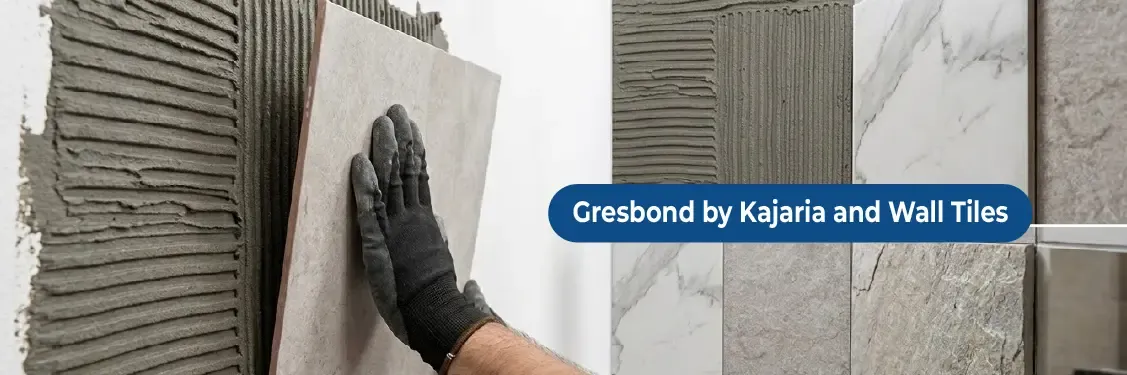
Gresbond by Kajaria makes tile adhesives that are designed to hold tiles firmly on walls.
Their products give good initial grip. That means when you press the tile, it stays there.
They are suitable for ceramic tiles, porcelain tiles, and natural stone.
With proper sag resistance, tiles stay in position during installation and after drying.
This helps give a smooth and long-lasting finish.
Final Words
The Slip (Sag) Resistance Test is simple but very important. It checks whether an adhesive can hold a tile on a wall without letting it slide down.
Good sag resistance means:
Tiles stay straight
Gaps remain equal
Bond becomes strong
Installation becomes easier
Finish looks clean
When you are installing wall tiles, do not ignore sag resistance. Because a good wall is not only about beautiful tiles. It is about tiles that stay in place — strong, stable, and secure for many years.