Shear Bond Strength Test: Why Sideways Grip Keeps Tiles Fixed
gresbond
March 3, 2026
Shear strength measures how well an adhesive resists sideways force from footfall, moving furniture and temperature change. This post explains how the test is run, what affects the result, and where high shear strength matters most.
When we see a beautiful tiled floor or wall, we usually notice the color, pattern, and finish. But what truly keeps those tiles in place is something we don’t see — the strength of the CX-1 tile adhesive underneath. A strong tile installation is not just about design. It is about bonding. This is where the Shear Strength Test becomes important. Let’s understand this in the simplest way.
What Is Shear Strength?
Shear strength is the ability of a tile adhesive to hold a tile firmly when pressure pushes it sideways. Think about daily life. People walk across the floor. Furniture gets moved. Temperatures change. All of this creates side pressure on tiles. If the adhesive is weak, the tile may slowly shift or loosen. If the adhesive is strong, the tile stays fixed in place. So, shear strength simply tells us how strong the grip is between the tile and the surface below it.
Why Is It So Important?

Tiles are used in homes, offices, malls, hospitals, kitchens, bathrooms, and outdoor areas.
These spaces go through daily stress. Without proper bonding, several problems can happen:
Tiles may come loose.
premium tile grout lines may crack.
Floors may make hollow sounds.
Water may enter through gaps.
Repairs can become expensive.
No one wants tiles lifting after a short time. That is why strong bonding is not optional. It is necessary. Good shear strength makes sure the tiles stay stable for many years. It protects both safety and appearance
How the Shear Strength Test Works
The Shear Strength Test is done in a lab to check how much sideways force an adhesive can handle before it fails. The process is simple: First, a clean and even surface is prepared. This surface could be concrete or cement board. Clean preparation is important because dust or moisture can affect the result. Next, the adhesive is applied evenly using a tool called a notched trowel. This helps maintain proper thickness. Then, a tile is pressed onto the adhesive and left to dry for a fixed time. This allows the adhesive to set properly. After curing, a testing machine applies sideways pressure to the tile. The pressure increases slowly until the tile comes off or the bond breaks. The maximum force the adhesive can handle is recorded. The higher the number, the stronger the adhesive.
What Affects Shear Strength?
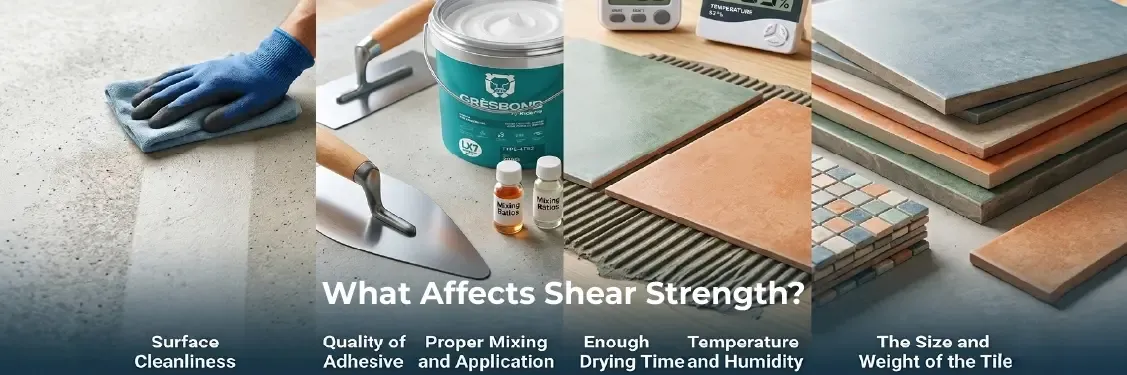
Several things can impact bonding strength:
The cleanliness of the surface
The quality of the adhesive
Proper mixing and application
Enough drying time
Temperature and humidity
The size and weight of the tile
Large or heavy tiles need stronger adhesive. Outdoor areas may also need higher strength because of weather changes. That is why choosing the right LX-7 flexible tile adhesive matters so much.
Real-Life Example
Imagine a busy kitchen floor. Every day, people walk on it. Chairs slide. Appliances vibrate. Sometimes water spills. All this creates stress on the tiles.
Now think about a shopping mall or hospital corridor. Hundreds of people walk there daily. The pressure is even higher.
If the adhesive does not have strong shear strength, tiles can slowly move or loosen. But if the bond is strong, everything stays secure.
Even bathroom walls need strong bonding because of moisture and temperature changes. A strong adhesive keeps tiles fixed even in wet areas.
The Role of Gresbond by Kajaria
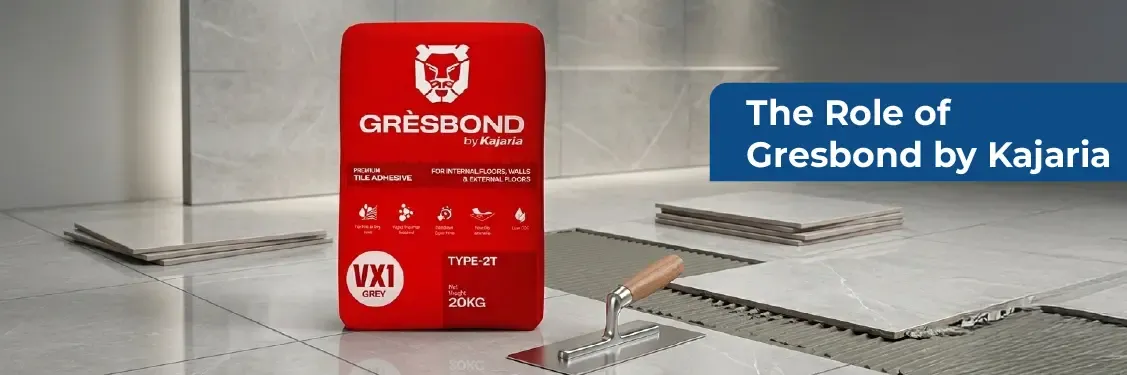
Gresbond by Kajaria focuses on producing tile adhesives that offer strong bonding performance. Their products are tested to make sure they can handle real-life stress, including adhesives designed for VX-1 tile adhesive applications.
Their adhesives are made to:
Hold tiles firmly in place
Support heavy loads
Reduce the risk of tiles coming loose
Work with ceramic, vitrified, and large tiles
Perform well in both homes and commercial spaces
Quality testing helps ensure consistency. When contractors and homeowners use a reliable adhesive, they reduce the chance of future repair work. Strong bonding means long-lasting results.
Long-Term Benefits of High Shear Strength
Using an adhesive with good shear strength gives many benefits:
Tiles remain stable for years
Less maintenance
Fewer cracks in grout
Better safety
Stronger structure overall
Tiles are an investment. Once installed, they are expected to last a long time. The strength of the adhesive plays a major role in that durability.
Final Thoughts
The Shear Strength Test may sound technical, but its purpose is simple. It checks how strong a tile adhesive is when facing sideways pressure. Strong shear strength means strong bonding. Strong bonding means safe and durable tile installation. When choosing a tile adhesive, it is important to focus not only on appearance but also on performance. A strong adhesive ensures that tiles stay firmly in place, even under daily stress. At the end of the day, beautiful tiles are important. But what truly keeps them beautiful for years is the strength that holds them in place.
Frequently Asked Questions
It is the adhesive's resistance to force acting sideways along the tile rather than pulling straight out. Footfall, sliding furniture, vibration and thermal movement all push tiles laterally, so shear strength is what stops a tile creeping or working loose over time.
A tile is fixed with a combed bed of adhesive onto a clean, level concrete or cement-board substrate and left to cure for a set period. A testing machine then applies steadily increasing sideways load to the tile until the bond fails, and the peak force is recorded as the shear bond strength.
Tensile, or pull-off, strength measures resistance to force pulling the tile straight away from the wall or floor. Shear measures resistance to force acting along the surface. A good adhesive needs both: tensile keeps wall tiles up, shear keeps floor tiles from shifting under traffic.
A dusty, damp or uneven substrate, an over-watered mix, patchy coverage that leaves voids, grouting or loading the floor before the adhesive has cured, and extreme heat or humidity during application. The product rarely fails on its own; the conditions around it usually do.
Commercial corridors, malls, hospitals and other high-traffic floors; kitchens where appliances vibrate and furniture slides; large-format and heavy stone tiles that transfer more load into the bond; and exterior floors that expand and contract daily with temperature.
Still have questions? Contact our technical team