Workability Test: Why It Is Important in Tile Adhesives
Gresbond by Kajaria Editorial Team
May 20, 2026
When we install tiles, most people pay attention to the tile design, size, and strength. But the real strength of any tiled surface depends on the adhesive underneath. The adhesive is what holds everything in place. If it is not good quality, tiles can loosen, crack, or even fall off after some time. Many people think strong adhesive is enough. Yes, strength is important. But there is another important factor that should not be ignored — workability. Workability makes the installation process easier, faster, and more comfortable. Without good workability, even a strong adhesive can create problems during application.
What Is Workability?
Workability simply means how easy the adhesive is to mix and use during installation. It describes how the material behaves when you prepare and apply it. A good tile adhesive should mix smoothly with water without forming lumps. It should have a soft and even texture. It must spread easily on the surface without too much effort. It should also remain usable for enough time so that tiles can be placed properly before it starts to set. If the adhesive is too thick, it becomes difficult to spread evenly. If it is too thin, it may not provide proper grip to the tiles. That is why having the right consistency and balance is very important for good results
Why Workability Matters
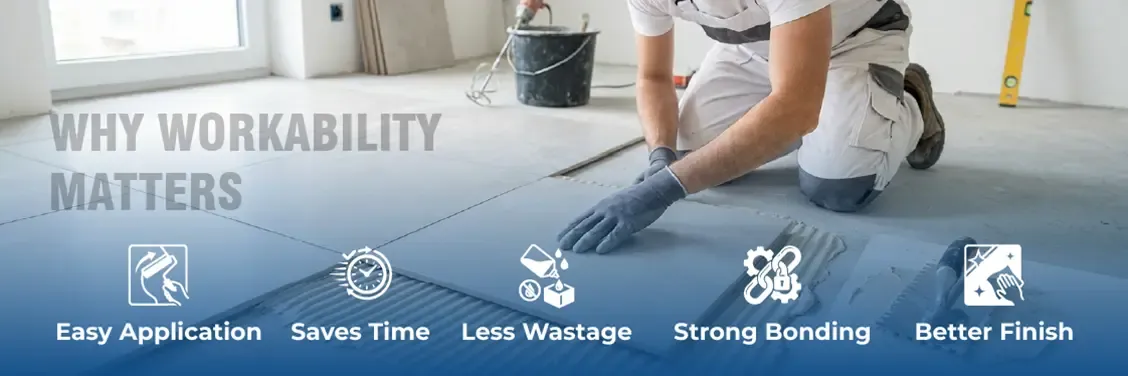
Workability directly affects the quality of tile installation.
Easy Application
When adhesive spreads smoothly, tiles can be placed easily. The installer does not need to struggle while working.
Saves Time
Good workability reduces mistakes. The work becomes faster and smoother.
Less Wastage
If adhesive spreads evenly, less material is wasted. This saves money and improves efficiency.
Strong Bonding
Even application creates a strong bond between tiles and the surface. If there are gaps under the tiles, they can become weak. Good workability helps avoid this problem.
Better Finish
Smooth adhesive application gives a flat and clean final look. The tiled area looks professional and neat.
What Is a Workability Test?
Before an adhesive is sold in the market, it is tested. One important test is the workability test.
In this test:
The adhesive is mixed to check how smooth it becomes.
It is applied on a test surface to see how easily it spreads.
The time it stays usable is checked.
The texture is examined to make sure it is even and lump-free.
This test ensures that the adhesive performs well during real installation work.
What Can Affect Workability?
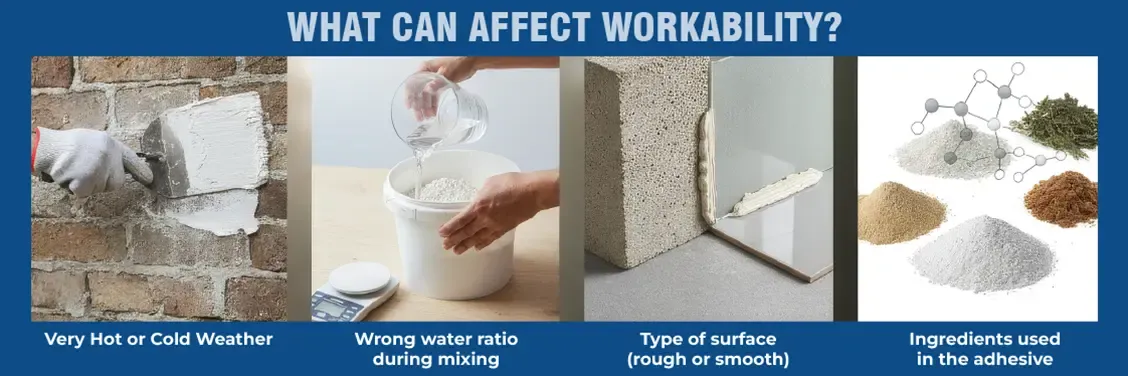
Some factors can change how an adhesive behaves:
Very hot or cold weather
Wrong water ratio during mixing
Type of surface (rough or smooth)
Ingredients used in the adhesive
That is why proper testing and quality control are important.
Gresbond’s Focus on Workability
Gresbond by Kajaria believes that strong bonding is important, but strength alone does not make a tile adhesive perfect. An adhesive must also be easy to handle during real site conditions. That is why Gresbond gives special attention to workability. Every product is carefully checked to ensure it mixes smoothly with water without forming lumps. The texture is tested so that it is neither too thick nor too thin. This balance helps installers spread the adhesive evenly on the surface without extra effort. The company also checks how long the adhesive stays workable after mixing. This is important because installers need enough time to place and adjust tiles properly before the adhesive starts setting. Good open time reduces pressure during installation and allows for better accuracy. By maintaining consistent quality in every batch, Gresbond ensures reliable performance on different surfaces and in different weather conditions. Because of this focus on workability, the installation process becomes easier and more efficient. Professional contractors can complete projects faster with fewer mistakes. Even homeowners or first-time users can work confidently without struggling with the material.
Conclusion
Tile adhesive strength is definitely important, but workability is just as essential. When an adhesive is easy to mix and spread, the entire installation process becomes smoother. Tiles can be placed correctly, bonding becomes stronger, and material wastage is reduced. The final finish looks clean, level, and professional. This is why the workability test plays such a key role in quality control. It ensures the adhesive performs well not only in laboratory strength tests but also in real working conditions. In simple words, good workability leads to better bonding, easier installation, and long-lasting tile performance.