Pot Life Test: How Long Tile Adhesive Stays Usable
gresbond
July 25, 2026
Pot life is the window in which mixed adhesive can still be used. This post explains how the pot life test works, how heat, humidity and mixing ratio change it, and how to plan batch sizes so no material is wasted.
In construction and interior work, adhesives are extremely important. Whether you are fixing tiles, installing wall panels, or doing flooring, the strength of the bond decides how long the work will last. But one important thing many people do not fully understand is “pot life.” The Pot Life Test helps professionals know how long an adhesive stays usable after mixing. This small detail makes a big difference in real project results. Let’s understand it in simple words.
What Is a Pot Life Test?
Pot life means the amount of time an adhesive remains workable after it has been mixed. When two components of an adhesive are mixed together, a chemical reaction starts. From that moment, the clock begins. The adhesive will stay soft and easy to apply for a limited time. After that, it starts becoming thick, hard, and difficult to spread. The Pot Life Test measures this usable time. Once the pot life is over, the adhesive should not be used. It may not stick properly, and the bond can become weak.
Why Pot Life Is So Important
Pot life directly affects the quality of work. If an adhesive is used after its working time, it can cause serious problems. Here’s why pot life matters.
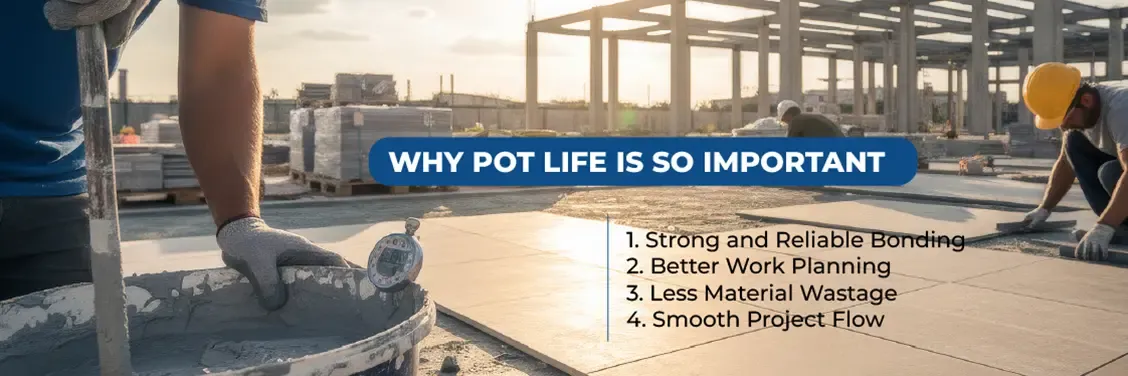
1. Strong and Reliable Bonding
If adhesive is applied within its pot life, it spreads smoothly and bonds properly. But if it is applied after it starts hardening, the bond may fail later.
Tiles may loosen.
Panels may shift.
Cracks may appear.
Testing pot life ensures the adhesive gives full strength during its usable time.
2. Better Work Planning
When workers know how long the adhesive will stay usable, they can plan their work properly. They know how much to mix and how fast they need to apply it. This avoids panic, delays, and rushed work.
3. Less Material Wastage
If too much adhesive is mixed and not used within its pot life, it becomes waste. The Pot Life Test helps professionals decide how much material to prepare at one time. This saves money and reduces loss.
4. Smooth Project Flow
On large construction sites, timing is everything. Knowing the pot life helps teams schedule their tasks correctly. Work moves smoothly without interruptions caused by hardened adhesive.
How Is the Pot Life Test Done?
The process is simple but important. First, the adhesive components are mixed according to the manufacturer’s instructions. After mixing, the material is observed carefully. Professionals check:
How smooth it feels
How easily it spreads
Whether the consistency changes
The adhesive is checked at regular time intervals. When it starts becoming thick, stiff, or difficult to apply, the usable time ends. That point is recorded as the pot life. In laboratories, tools are used to measure changes in thickness and temperature. On-site, experienced technicians can identify the changes by handling the material.
What Affects Pot Life?
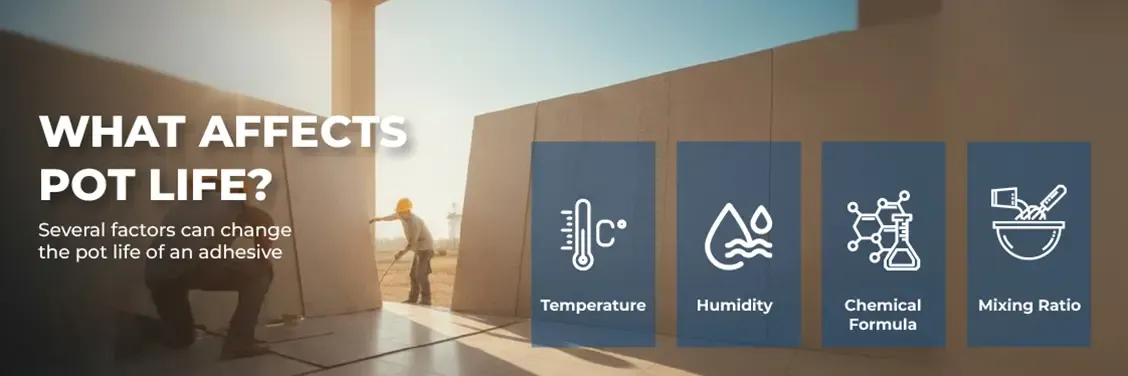
Several factors can change the pot life of an adhesive.
Temperature
High temperature speeds up the chemical reaction. This reduces pot life.
Low temperature slows the reaction and can increase pot life.
That is why adhesives may behave differently in summer and winter.
Humidity
Moisture in the air can affect some adhesives. It may change how fast they cure.
Chemical Formula
Different adhesives have different ingredients. The type of resin and hardener used in the formula decides how long the adhesive will stay workable.
Mixing Ratio
If the components are not mixed in the correct ratio, the pot life can change. Too much hardener may cause early setting. Incorrect mixing may also reduce strength.
Pot Life in Different Applications
Pot life is important in many types of work.
Tile Installation
In tile work, installers need enough time to place tiles properly and adjust alignment. If adhesive sets too fast, proper placement becomes difficult.Correct pot life ensures tiles sit evenly and securely.
Wall Panels and Large Surfaces
For large walls and decorative surfaces, workers need enough working time to cover wide areas smoothly. A stable pot life makes this possible.
Heavy Construction Bonding
In structural applications, adhesives must remain workable long enough for accurate placement. At the same time, they must develop strong bonding after application.
Gresbond by Kajaria and Pot Life Quality
At Gresbond by Kajaria, adhesives are tested carefully to ensure consistent pot life.Each product batch goes through strict quality checks. This ensures:
Easy and smooth application
Strong and durable bonding
Reliable working time
Consistent performance
Whether the job is residential flooring, commercial tiling, or decorative surface bonding, controlled pot life gives confidence to contractors and homeowners.It means the adhesive will behave as expected every time.
Best Practices for Using Adhesive Within Pot Life
To get the best results, professionals should follow some simple steps.Always measure components correctly. Follow the mixing instructions carefully.Do not guess proportions.Mix only the amount you can use within the working time. Avoid preparing large batches unnecessarily.Keep an eye on time. Once mixed, track how long the adhesive has been sitting.Also, try to work in stable temperature conditions whenever possible.These small habits prevent mistakes and improve overall quality.
Final Thoughts
The Pot Life Test may sound technical, but it plays a very practical role in construction work.It tells us how long an adhesive stays usable. It protects bonding strength. It reduces wastage. It supports proper planning.When pot life is controlled and tested properly, the final result is stronger, cleaner, and longer-lasting work.For brands like Gresbond by Kajaria, pot life testing is part of their commitment to quality. It ensures that every adhesive product is not only strong but also easy to use in real working conditions.In simple words, understanding pot life helps professionals do better work - and that makes every project more successful.
Frequently Asked Questions
Pot life is the time an adhesive stays soft and workable after it has been mixed. Once that window closes the material stiffens and will no longer wet the tile or the substrate properly, so anything laid with it can debond later even though it looks fine on the day.
The components are mixed exactly as the pack instructs, then the mix is checked at regular intervals for how smoothly it spreads and whether its consistency has changed. The moment it turns stiff and hard to work is recorded as the end of the pot life. Labs measure the change in viscosity; on site, experienced hands judge it by feel.
Heat is the biggest factor: high temperatures speed up the reaction and cut the working window, which is why summer tiling feels rushed. High humidity affects how some products cure, and getting the mixing ratio wrong, especially too much hardener in a two-part product, can make it set early.
No. Re-tempering with extra water or remixing a stiffened batch does not restore the bond; it just makes a weak mix that looks usable. Once pot life is over, discard that batch and mix fresh. This is the single most common shortcut behind hollow and loose tiles.
Only as much as your team can lay within the pot life given on the pack, allowing for the day's temperature. In hot weather mix smaller batches more often and keep the spread area short so the adhesive does not skin over before the tile goes down.
Still have questions? Contact our technical team