How Weather Affects Tile Adhesive: Summer, Monsoon & Winter
gresbond
January 28, 2026
Most adhesive failures come down to site conditions, not the product. This post explains how heat, humidity and cold change setting and bonding, the safe working temperature range, and how to adjust method and product choice by season.
Introduction: Why Temperature Matters in Tile Adhesive Applications
Most tile adhesive problems do not happen because the product is bad. In many cases, the adhesive is fine. The real issue starts when weather conditions are not taken seriously during installation. Temperature and humidity change how tile adhesive behaves on site, and this directly affects the final result.
Tile adhesive does not act the same way every day. In hot weather, it dries faster than expected. In humid conditions, it stays wet for longer. In cooler weather, it takes more time to gain strength. If the same fixing method is used in all these situations, problems slowly begin to appear.
In India, weather changes a lot across seasons. Summers can be very hot, especially on open floors and walls exposed to sunlight. Monsoon brings moisture into the air, which interferes with setting and bonding. In some regions, winter temperatures slow down curing. These changes may not cause issues immediately, but they weaken the installation over time.
Adhesive that dries too quickly may not grip the surface properly. Adhesive that sets too slowly can allow tiles to move before they become stable. These issues usually show up later as loose tiles, hollow sounds, cracked grout, or water getting under the surface.
Good tile work means adjusting the method based on weather. When that is done, tile installations stay strong, stable, and trouble-free for years.
In this blog, we talk about:
How temperature changes adhesive strength
What humidity actually does to tile adhesive
What temperature range is safe for tile work
What works better in Indian summer, monsoon, and winter
How Temperature Affects Tile Adhesive Performance
Tile adhesive reacts differently depending on the weather. On hot days, it dries very fast and does not always get time to grip the surface properly. In cold conditions, the setting slows down and strength takes longer to build. Both situations change how the adhesive performs. If temperature is not considered while fixing tiles, the problem usually does not show immediately. Tiles may look fine in the beginning, but after some time issues start showing up, like loose tiles, hollow sounds, or weak bonding.
How Does Temperature Affect Adhesive Strength?
In hot weather, adhesive dries too fast
In cold weather, adhesive sets very slowly
In both cases, the final bond can become weak if the working method is not adjusted.
What Is the Ideal Temperature Range for Tile Adhesive?
For most cement-based tile adhesives, the safe working range is:
Around 5°C to 35°C
Outside this range:
Adhesive may not cure properly
Tiles may not stick firmly to the surface
That is why tile work should always be planned according to site temperature.
Summer Season: High Temperature Challenges
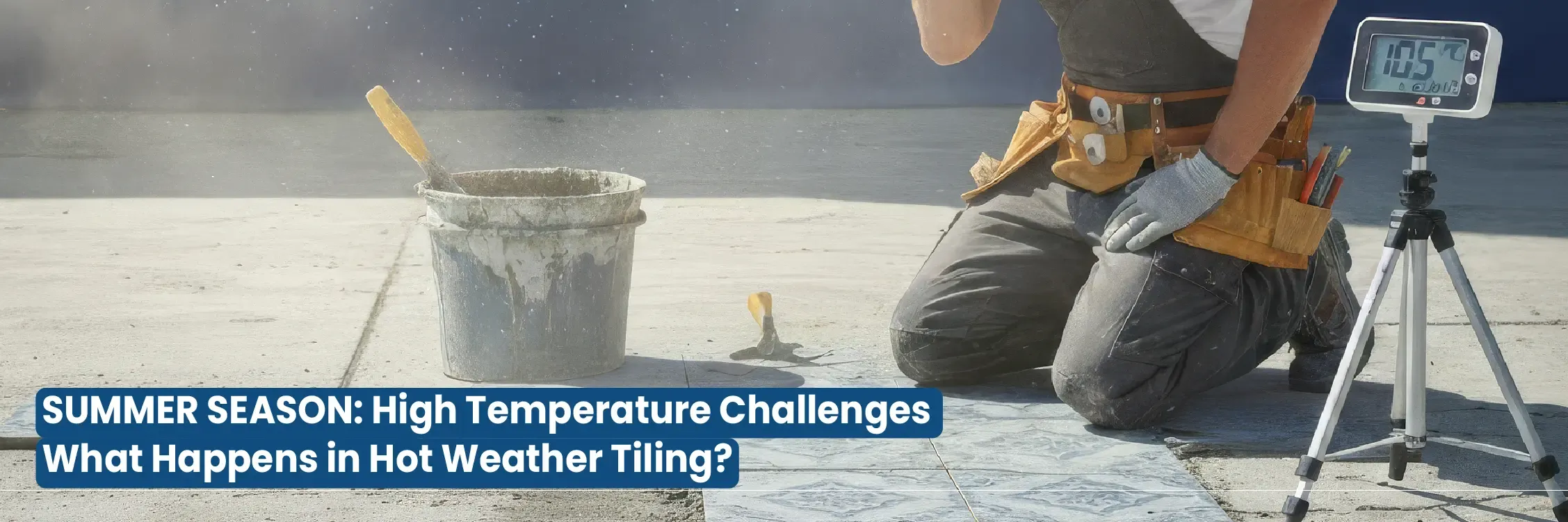
What Happens in Hot Weather Tiling?
During summer:
Floors and walls become very hot
Adhesive open time becomes very short
Water in the mix evaporates quickly
Common Problems in Summer
Tiles do not sit properly
Bond strength remains weak
After some time, hollow sound or tile loosening appears
Best Practices for Summer Tiling
Slightly dampen the surface before applying adhesive
Avoid working under direct sunlight
Mix small batches of adhesive
Use adhesive suitable for high-temperature conditions
Simple point:
In summer, control heat and don’t rush the work.
Monsoon Season: The Impact of Temperature and Humidity
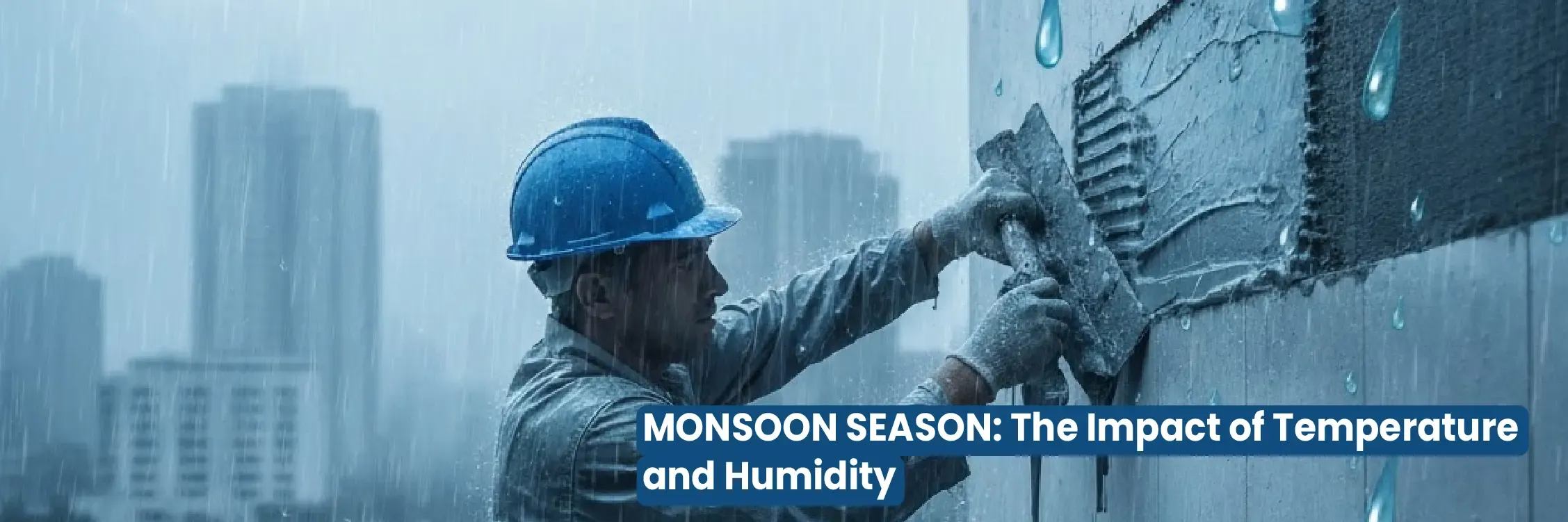
Monsoon is a tricky time for tile work. The problem is not heat. The real issue is moisture in the air. Even when there is no direct rain, humidity stays high all day. This changes how tile adhesive behaves after application. Many installations fail simply because this part is ignored.
During monsoon, everything takes longer. Adhesive does not set the way it does in dry weather. If work is rushed, tiles may look fine at first but problems show up later.
How Humidity Affects Tile Adhesive Workability
In humid weather, adhesive reacts slowly. Moist air interferes with normal setting.
When humidity is high:
Adhesive stays wet for longer
Bond strength develops slowly
Setting is not uniform across the surface
Because of this, tiles may move slightly before the adhesive becomes strong enough.
Common Monsoon Problems
When tile work is done without adjusting for monsoon, these issues are common:
Tiles shift after fixing
Adhesive becomes weak or loose
Some areas set faster, others stay soft
How to Choose Waterproof Tile Adhesive for Indian Monsoon
Always use polymer-modified, water-resistant tile adhesive
Make sure the surface feels dry before starting work
Do not tile when rain or water exposure is expected
Give more curing time before grouting
Trying to finish work fast during monsoon usually creates repeat repairs.
Why Waterproof Tile and Marble Adhesives Matter Most During Monsoon
In rainy weather, surface preparation alone is not enough. The adhesive must handle moisture on its own. If it absorbs water, bonding slowly weakens and tiles lose grip over time. Waterproof tile and marble adhesives reduce this risk and help the installation stay stable even in high humidity.
Winter Season: Low Temperature Effects
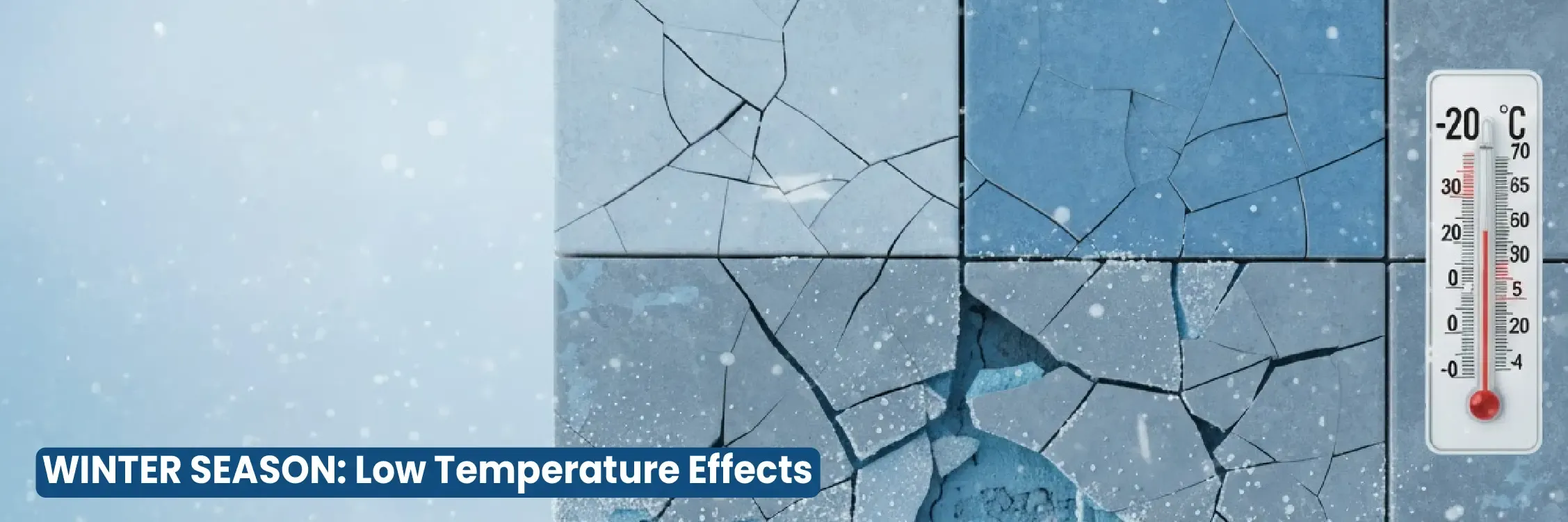
How Low Temperature Impacts Adhesive Performance
In winter:
Chemical reactions slow down
Adhesive takes more time to set
Common Winter Issues
Tiles move if disturbed early
Initial bonding strength remains low
Winter Tiling Best Practices
Avoid tiling early morning and late night
Store adhesive and tiles at normal room temperature
Wait for full curing before grouting
In winter, patience matters more than speed.
Choosing the Right Tile Adhesive for India’s Varied Climates
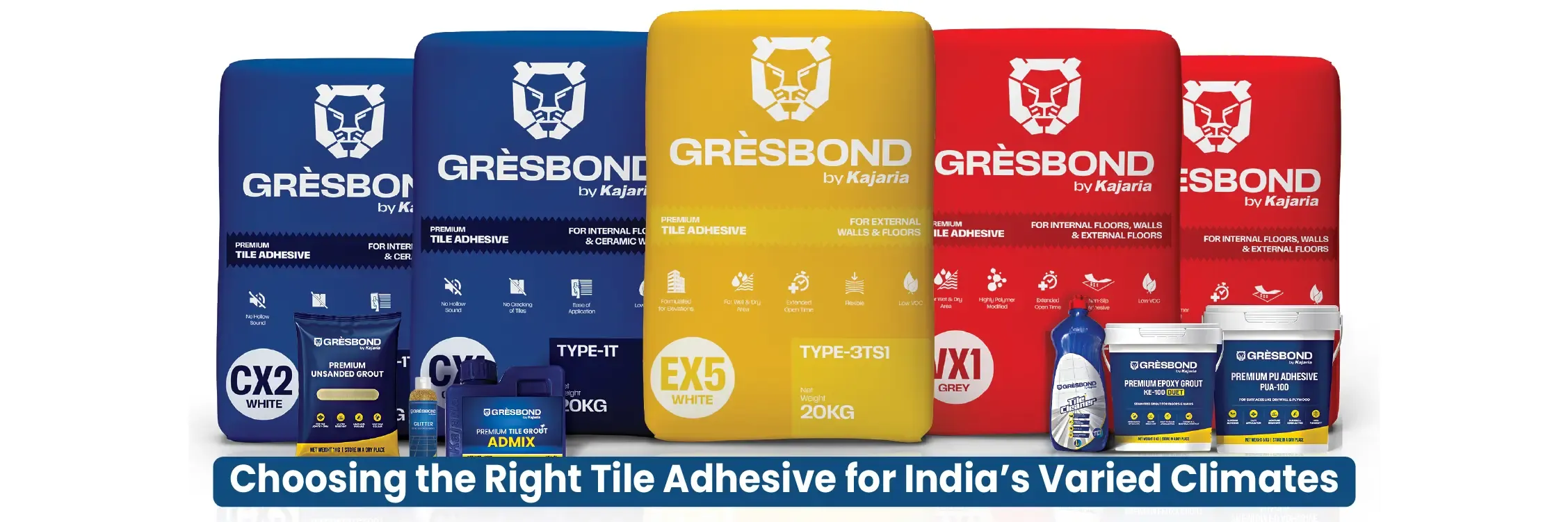
One tile adhesive cannot perform the same way everywhere in India.
Different regions need different performance:
Hot regions need heat-resistant adhesive
Coastal and monsoon areas need waterproof adhesive
Cold regions need adhesive that works at low temperatures
Choosing adhesive based on local climate increases tile life and reduces failures.
How Temperature and Humidity Affect Adhesive Performance (Simple Explanation)
In simple words:
Too much heat dries adhesive too quickly
Too much moisture stops proper setting
If the wrong adhesive or wrong method is used, tiles will not hold properly.
Tools That Improve Weather-Based Tiling
Using the right tools improves consistency. A tile leveling system, tile spacers, st9-1400 mixer, and cordless tile vibrator help maintain proper setting even in difficult conditions. You can also explore the full range through the catalogue.
Final Thoughts
Most tile adhesive failures do not happen because the adhesive is bad. They happen because site conditions are not taken seriously. Weather plays a bigger role than people realise. Heat, moisture, and cold all change how adhesive behaves. If the wrong adhesive is used for the season, or if the same method is followed every time, problems slowly start showing up. Tiles may look fine in the beginning, but over time they loosen, grout cracks, and repairs become necessary. When installers choose adhesive based on the season and adjust their working method according to temperature and humidity, the result is very different. Bonding stays strong, tiles remain stable, and the installation lasts for years without trouble. Paying attention to weather is not a technical extra—it is just common sense on site.
Frequently Asked Questions
Because weather conditions were ignored during installation. Heat, cold, and humidity change how adhesive sets, and problems usually appear later.
Yes. High temperature dries adhesive too fast, while low temperature slows down curing. Both can weaken bonding if not managed properly.
High humidity slows curing and reduces bond strength. Tiles may slip, adhesive can weaken, and long-term failures become common.
Yes. Polymer-modified and water-resistant adhesives perform better during monsoon conditions.
Not always. Adhesive should be selected based on weather, tile type, and area of use for best results.
Common reasons include fast drying in summer, slow curing in winter, or moisture exposure during monsoon.
Longer than usual. Extra curing time helps the adhesive gain proper strength before grouting.
No. Surface prep is important, but adhesive selection and application method matter just as much.
Yes. Waterproof adhesives resist moisture and maintain bonding strength during monsoon.
Using the same installation method in every season without adjusting for temperature and humidity.
Still have questions? Contact our technical team