Tile Adhesive Buying Guide for Indian Homes
Gresbond by Kajaria Editorial Team
November 23, 2026
Tiles gum, fixing chemical, pasting chemical all mean tile adhesive. A plain guide to what to buy for ceramic, vitrified and stone tiles.
Ask for tile adhesive at a local hardware shop and you might call it three different things before the shopkeeper nods. Tiles gum. Tile fixing gum. Tile pasting chemical. In many parts of India the Hindi phrase comes out first: tiles chipkane ka chemical. All of these mean the same product, and none of them are wrong.
The confusion is not about the words. It is about which one to buy once you know what it is. A bathroom floor and a marble feature wall do not take the same grade. Use the wrong one and the tiles can sound hollow or start debonding within a year. It happens often. This buying guide clears up the names first. Then it walks through which grade suits which tile, so you buy the right bag the first time.
Key Takeaways
- Tiles gum, fixing chemical and pasting chemical all mean tile adhesive. Same product, local names.
- Tile adhesive is not the same as site-mixed sand-cement mortar. It is a formulated, polymer-modified bonding system.
- The tile, the surface and the room all decide the grade. Ceramic, vitrified and stone each need a different type.
- White adhesive matters under pale or translucent tiles so the bed does not show through.
- Vitrified tiles need a polymer grade. A basic adhesive has almost nothing to grip.
- Buy by the job, not the price. The cheapest bag is dear if the floor fails.
- Match quantity to the area before you order, and add for wastage.
Tiles gum, fixing chemical, pasting chemical: all tile adhesive
Let us settle the vocabulary, because it trips up first-time buyers constantly.
Tiles gum is tile adhesive. So is tile fixing gum, tile pasting chemical and tiles chipkane ka chemical. These are the names the product picked up in shops and on sites across India, and a shopkeeper will know exactly what you mean. You are not using the wrong word. You are describing a real product by its common name. Simple as that.
Tile adhesive is a factory-made bonding material for fixing tiles in a thin, even bed. Most grades are mixed on site and combed onto the surface before setting the tile. Grades for metal or board surfaces are two-part resin systems instead. Grades run from basic ones for ceramic through to specialist ones for difficult surfaces. The full tile adhesives category lists them all.
Why tile adhesive is not the same as cement
Older homes were tiled with a thick bed of sand and cement. It worked, after a fashion, on the porous tiles of the time. It does not work on modern tiles, and this is a key point in this buying guide.
Cement bonds by grabbing into a porous surface. A modern vitrified tile has almost no pores. A plain cement bed has little to hold. The tile sits on top rather than bonding. Sooner or later it sounds hollow and debonds. Adhesive helps, because its polymers improve the bond to a smooth tile back. Plain cement is poor at that.
There is a thickness difference too. A cement bed is thick and shrinks as it dries. That cracks tiles over large areas. An adhesive bed is thin and stable. For most modern tiles, the switch from cement to adhesive is a major upgrade.
Which tile adhesive to buy for which tile
Here the buying guide gets practical. Start with the tile you are fixing, then check the surface and the room.
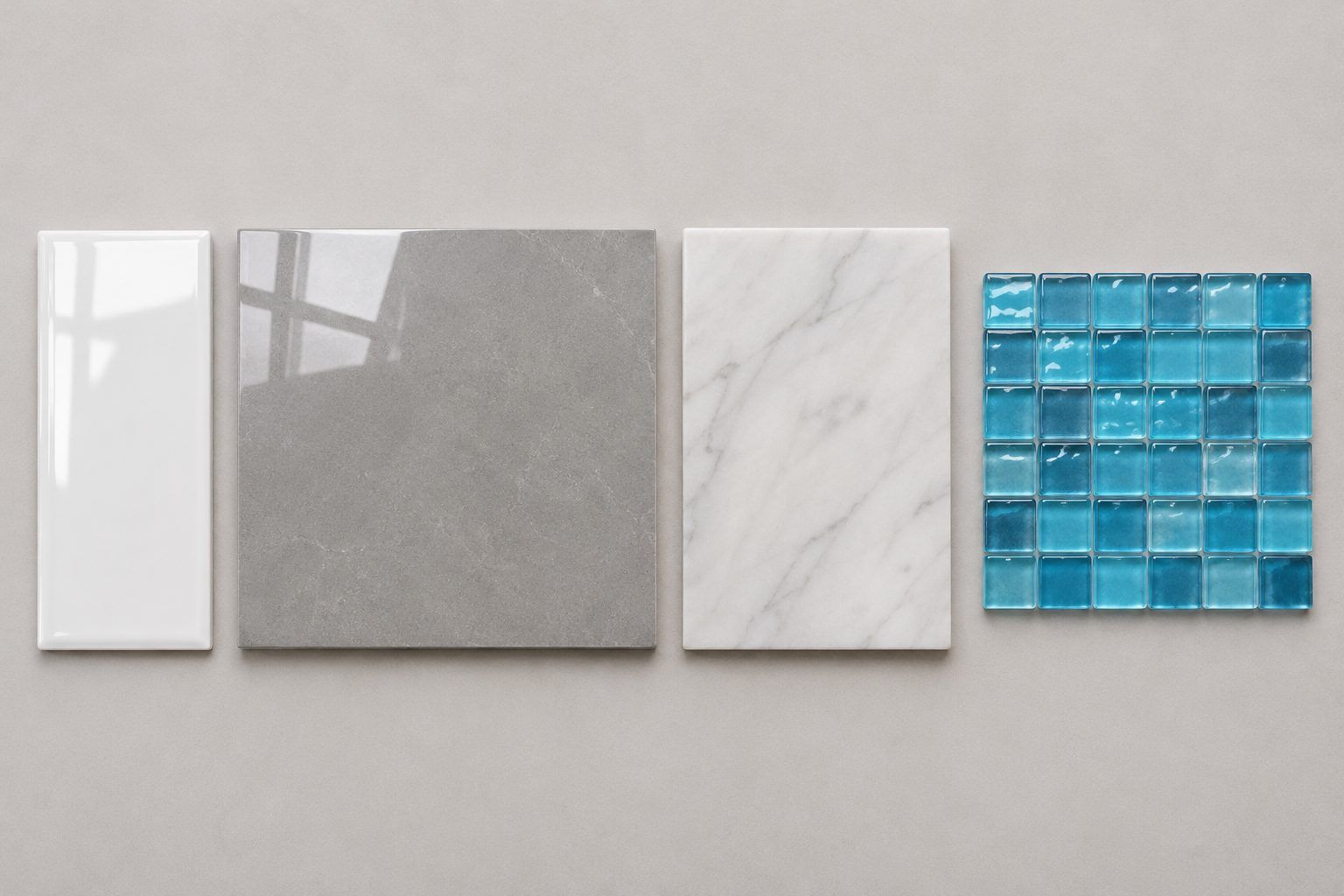
Ceramic wall and floor tiles are the forgiving ones. IS 15477:2019 puts small ceramic tiles in Type 1, which is for interior dry area applications only. Light ceramic is the one case to watch. A grey bed can shadow through a pale tile, so a white grade is safer there.
Vitrified and porcelain tiles are the common choice in Indian homes and the one that catches people out. Their low porosity means the bond leans heavily on the polymers in the adhesive. So they need a polymer-modified grade, such as an IS 15477 Type 2, not a basic one. Our guide on vitrified tile adhesive explains why the difference is so large.
Pale or translucent marble and natural stone usually need a white adhesive. It keeps the bed from shadowing the stone, and some stone can stain. Mosaics, large slabs and tile-over-tile renovation each have their own grade too. Do not try to memorise all of it. Nobody does. Run the job through the tile adhesive selector, which maps the tile and surface to a grade in a minute.
How much to buy
Running short stops the job halfway. Buying too much wastes money on bags that may absorb moisture before you use them. Both mistakes cost money.
Coverage depends on the tile size, the bed thickness and the trowel, so there is no single figure that fits every job. Work out the area you are tiling, then add an allowance for wastage, cuts and the odd tile you reset. For an accurate figure, the published coverage for your grade is on its product page and in the TDS.
Buy in one go rather than in dribs and drabs, because colour and batch can vary slightly between lots on a cement product. And store the spare bags sealed, dry and off the floor until you need them.
What drives the price
Price comes last in a good buying decision, not first, and it helps to know what you are paying for.
A basic ceramic grade costs less than a polymer grade for vitrified tiles or stone. The polymer content is doing more work. A white adhesive costs more than grey because white cement is dearer. Pack size and the specialist chemistry in grades for difficult surfaces also move the price.
The false economy is buying a cheap grade for a demanding job. It is a trap. A bag saved on a vitrified floor is nothing against the cost of lifting and relaying it when it fails. For live pricing and where to buy, use the dealer locator rather than third-party listings.
A simple buying checklist
- What tile are you fixing? Ceramic, vitrified, marble, mosaic or large slab?
- Indoor or outdoor, and is it a wet area?
- Does the tile need a white bed? Pale or translucent tiles usually do.
- Is it a fresh surface or tiling over an old floor?
- Have you matched the grade with the selector rather than guessing?
- Have you measured the area and added for wastage?
- Are you buying in one batch and storing it dry?
Frequently Asked Questions
Yes. Tiles gum, tile fixing gum, tile pasting chemical and tiles chipkane ka chemical are all common names for tile adhesive. It is a bonding material made for fixing tiles in a thin bed, sold in grades for different tiles, surfaces and rooms.
For modern vitrified and porcelain tiles, no. Cement grips into pores, and these tiles have very few, so the tiles can sound hollow or debond. Tile adhesive uses polymers that help it bond to a smooth tile back, which plain cement does poorly.
A polymer-modified grade made for low-porosity tiles, because the bond relies heavily on the polymer. Use the tile adhesive selector to match the exact grade to your tile and surface.
A grey bed can show through a pale or translucent tile and make it look patchy. White adhesive prevents that, which is why it is used under light marble, pale ceramic and glass mosaic.
It depends on tile size, bed thickness and trowel. Take the coverage figure from your grade's product page, work out your area, and add an allowance for wastage.
Not always. The right grade for the job matters more than the price. A basic grade is correct and cheaper for a simple indoor ceramic job, while a vitrified floor needs the polymer grade.
Yes, if the bag is sealed and kept dry and off the floor. Powder adhesive takes up moisture from the air, so an open or damp bag loses strength. Gresbond tile adhesives have a shelf life of 1 year from the date of manufacture, so check that date on the bag.
Still have questions? Contact our technical team