Compressive Strength Test: Why It Is Important for Strong and Long-Lasting
gresbond
May 13, 2026
When people plan a home or building project, they usually think about tiles, marble, color, and design. Everyone wants the space to look beautiful. But there is something more important than the design — the adhesive that holds the tiles in place.
Tiles may look strong, but they cannot stay fixed without good adhesive. If the adhesive is weak, tiles can crack, lift, or come loose over time. That is why the compressive strength test is very important. It checks how strong the tile adhesive really is.
Let’s understand this in simple words.
What Is a Compressive Strength Test?
A compressive strength test checks how much pressure or weight a material can handle before it breaks.
For tile adhesives, this test shows whether the adhesive can support heavy tiles and daily pressure without cracking. In simple terms, it tells us how strong the adhesive is.
In a laboratory, the adhesive is mixed according to instructions. It is then poured into small molds to make test samples. These samples are left to dry and harden properly. Usually, they are cured for about 28 days so that the adhesive reaches its full strength.
After curing, the sample is placed inside a special testing machine. The machine slowly applies pressure from the top. The pressure keeps increasing until the sample cracks or breaks. The maximum pressure it can handle is recorded.
If the number is high, it means the adhesive is strong. If the number is low, it means the adhesive may not be strong enough for heavy use.
Why Is Compressive Strength Important for Tile Adhesives?
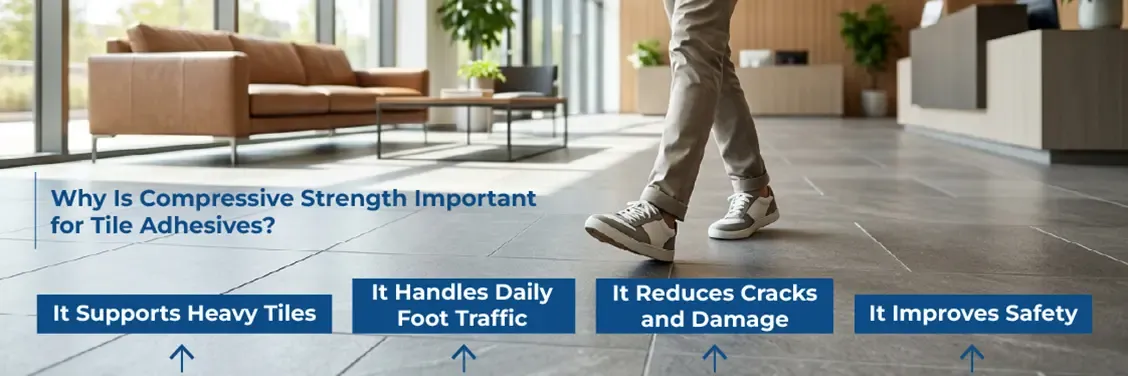
Tiles are not light. Large tiles, porcelain tiles, and natural stone tiles are quite heavy. Once they are fixed on floors or walls, they stay there for many years. The adhesive must be strong enough to hold them every single day.
Here are some simple reasons why this test matters.
1. It Supports Heavy Tiles
Modern designs often use large-format tiles. These tiles are bigger and thicker than normal tiles. If weak adhesive is used, it may crack under the weight.
Strong adhesive keeps the tiles firm and stable.
2. It Handles Daily Foot Traffic
Think about places like malls, hospitals, offices, airports, and schools. Hundreds or even thousands of people walk on those floors every day.
The floor faces constant pressure. If the adhesive does not have good compressive strength, tiles can loosen over time. A strong adhesive prevents this problem.
3. It Reduces Cracks and Damage
Buildings naturally expand and shrink because of heat, cold, and moisture. This movement creates pressure under the tiles.
A strong adhesive can handle this pressure better. It reduces the chances of cracks and tile damage.
4. It Improves Safety
Loose or cracked tiles can cause accidents. People can trip or slip. Repairing damaged tiles also costs money and time.
When adhesive is tested properly, it lowers the risk of failure. That means safer floors and fewer repairs.
How the Testing Process Works
The process is simple but done carefully.
First, the adhesive is mixed as per the manufacturer’s instructions.
Second, it is poured into molds to create equal-sized samples.
Third, the samples are cured under controlled conditions so they harden properly.
After curing, the samples are placed in a compression testing machine. The machine slowly increases pressure on the sample.
Finally, the machine records the maximum load the sample can handle before breaking.
If the adhesive meets the required strength level, it is approved. If not, it is rejected.
Industry Standards
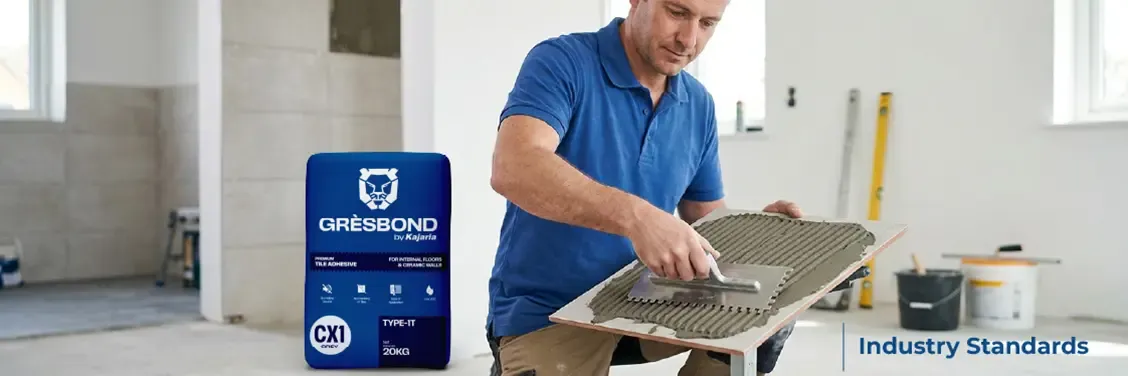
Tile adhesives must follow certain quality standards to ensure safety and performance. These standards define how strong the adhesive should be.
Manufacturers test their products according to these standards before selling them in the market. This helps make sure that the adhesive performs well in real construction projects.
When you choose a well-tested product, you can trust its quality.
Real-Life Example
Let’s take a simple example.
Imagine a large shopping mall with thousands of square feet of tiled flooring. Every day, many people walk across it. There are heavy display units, furniture, and cleaning machines moving over the floor.
If weak adhesive is used, tiles may start cracking or lifting within a few years. Repairs will be expensive and time-consuming.
But if strong adhesive with good compressive strength is used, the tiles will remain firm and stable for many years without problems.
The same applies at home. In kitchens, bathrooms, balconies, and living rooms, tiles face daily use. Strong adhesive ensures they stay in place for a long time.
Benefits of High Compressive Strength
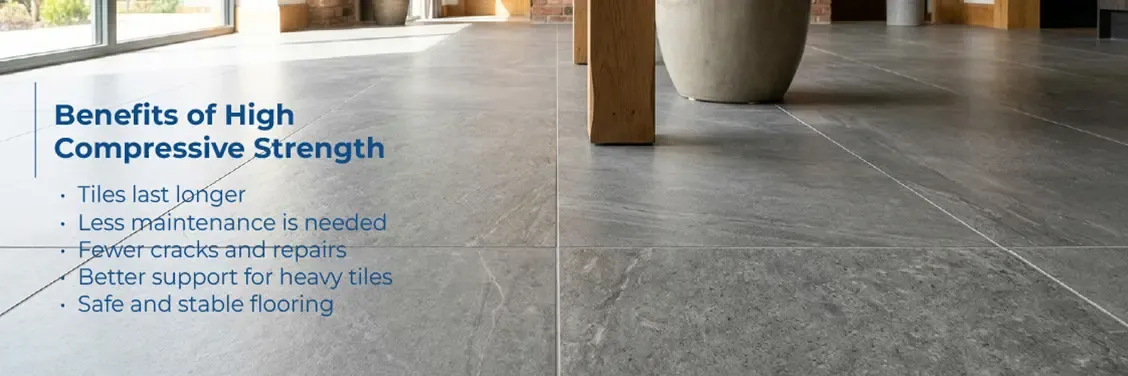
Choosing adhesive with high compressive strength gives many benefits:
Tiles last longer
Less maintenance is needed
Fewer cracks and repairs
Better support for heavy tiles
Safe and stable flooring
It gives peace of mind to homeowners, contractors, and builders.
Final Thoughts
The compressive strength test may sound technical, but the idea behind it is simple. It checks whether tile adhesive is strong enough to handle weight and pressure.
Tiles are an investment. People expect them to last for many years. That can only happen when strong adhesive is used.
So, whenever you choose tile adhesive, make sure it has been properly tested. Strong adhesive is not just about sticking tiles. It is about safety, durability, and long-lasting performance.
In the end, beautiful tiles need strong support underneath. And that strength starts with proper testing.