How to Choose the Perfect Tile Adhesive for Every Room in Your Home
Gresbond by Kajaria Editorial Team
October 10, 2024
A room-by-room guide to picking tile adhesive for your home. Understand what tile adhesive is, why kitchens, bathrooms, living areas and outdoor spaces need different products, and how to match Gresbond CX, VX, EX-5 and LX-7 to the job.
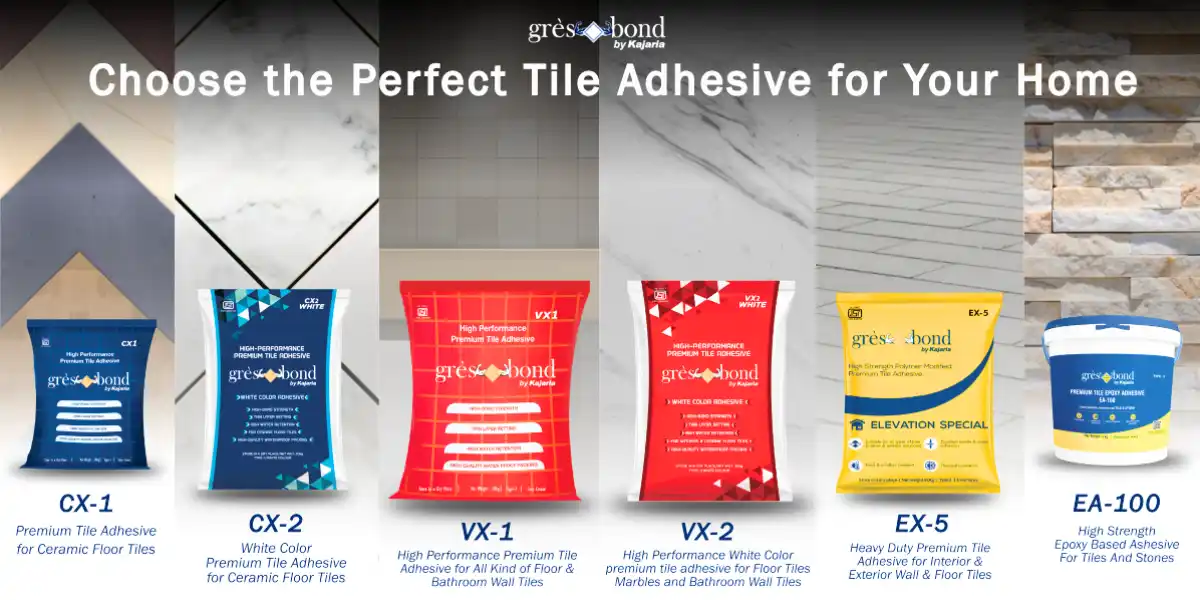
How to Choose the Perfect Tile Adhesive for Your Home
Selecting the right tile adhesive is crucial to ensuring that your tiles stay securely in place and that your installation looks impeccable. With many tile adhesive brands and options available, finding the perfect match for each room in your house can be overwhelming. This guide will help you navigate the choices and select the ideal tile adhesive for every room.
What is Tile Adhesive?
Before discussing specifics, it iss important to understand tile adhesive and how it works. Tile adhesive, often called tile adhesive cement, bonds tiles to surfaces like floors, walls, and countertops. It comes in various forms, including thin-set mortar, epoxy, and mastic, each with unique properties and applications.
Choosing Adhesive for Different Rooms
Kitchen
Due to moisture, heat, and frequent use, the kitchen is one of the most demanding environments for tile adhesive. Use epoxy-based tile adhesive for kitchen tiles, especially on walls and backsplashes. Epoxy adhesives are highly resistant to moisture and stains, making them perfect for the kitchen environment. They also provide strong bonding for tiles in high-traffic areas.
Bathroom
Bathrooms are another high-moisture area where choosing the suitable adhesive is crucial. Thin-set mortar is often the best choice for bathroom tiles, including showers and bathtubs. It is water-resistant and provides a strong bond that can handle constant exposure to water and steam. If you’re tiling a shower or other high-moisture areas, look for a modified thin-set mortar with additional water resistance and flexibility.
Living Room and Bedrooms
The choice of tile adhesive depends mainly on the tiles used and the subfloor material. Thin-set mortar is generally suitable for most tile installations in these areas. If you’re using large-format tiles or tiles made of materials like porcelain or natural stone, opt for a medium-bed mortar or a flexible thin-set mortar. These options offer better support and accommodate the weight of larger tiles, ensuring a smooth and durable finish.
Outdoor Areas
Outdoor spaces such as patios and decks require a tile adhesive to withstand temperature fluctuations and moisture. Exterior-grade thin-set mortar or modified thin-set mortar is ideal for these areas. Look for products specifically labeled for outdoor use, which provide the necessary durability and weather resistance.
Application Tips
Surface Preparation: Before applying the adhesive, ensure the surface is clean, dry, and free from dust or grease. Proper surface preparation ensures better adhesion.
Mixing and Application: Mix the adhesive as directed by the manufacturer. Use a notched trowel to apply the adhesive evenly, working in small sections to prevent it from drying out before tiling.
Grouting: Allow the adhesive to cure fully before grouting. This ensures a strong bond between the tiles and the substrate.
Choosing the suitable tile adhesive is crucial to successful tile installation. By understanding the needs of each room and selecting a reputable tile adhesive brand, you can ensure that your tiles stay securely in place and that your home retains its beauty for years to come. Whether you are renovating your kitchen, bathroom, or any other part of your home, Gresbond by Kajaria and other top tile adhesive brands offer solutions to meet your needs.
Frequently Asked Questions
Start with three questions: what tile (ceramic, vitrified, stone or large format), where it goes (dry interior, wet area or exterior) and what it sits on (plaster, concrete or old tiles). The Gresbond tile adhesive selector on the website matches these answers to the right product, from CX-1 for ceramic to LX-7 for large slabs.
Use a polymer-modified cement adhesive rated for wet areas. Gresbond CX-1 or CX-2 suits ceramic bathroom tiles, while VX-1 handles vitrified tiles and showers. Waterproof the floor and wall junctions first, and finish with an epoxy grout so water cannot get into the joints.
Kitchen walls see heat, steam and grease, so choose an adhesive with good grip and slip resistance for vertical work. CX-1 or CX-2 works for ceramic backsplash tiles; for glass mosaics or vitrified dado tiles, EX-5 gives a stronger, non-slip bond.
Large tiles and slabs need a deformable adhesive that spreads into a full, even bed without sagging. Gresbond LX-7 S1 is made for large-format tiles on floors and walls; LX-7 Super Flex S2 is the choice where more movement or a deformable substrate is expected.
No. Exterior floors go through daily heating and cooling and heavy rain, so they need an adhesive rated for outdoor use. Gresbond VX-1, VX-2 or EX-5 are suitable for exterior floors; check the technical data sheet and pair them with a grout that is rated for outdoors.
Still have questions? Contact our technical team